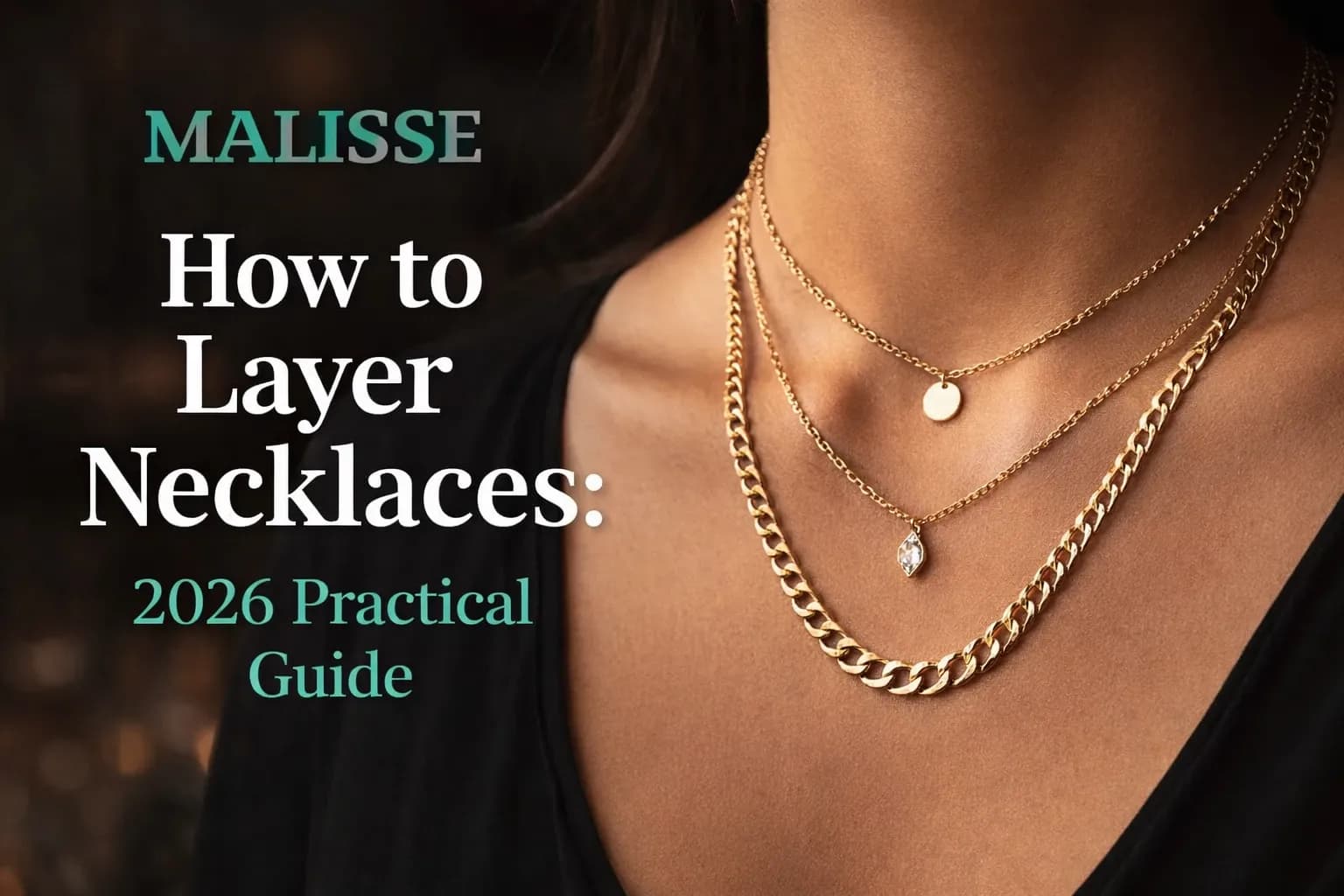
Layered necklaces look best when you combine two or three chains with clear spacing, one focal point, and a reliable base length. For most people, the easiest formula is 16 in + 18 in + 20 in, with one simple chain and one pendant.
If you are shopping for layered necklaces, the goal is not just to stack more pieces. The goal is to create balance, avoid tangling, and choose lengths and materials you will actually wear. This guide covers practical necklace layering formulas, quality checks, and the best silver necklace options for everyday styling, work outfits, events, and gifting.
Who This Guide Is For
This guide is for anyone who wants layered necklaces to look intentional instead of crowded. It is especially useful if you are buying your first stack, choosing a gift, or trying to build a versatile everyday jewelry rotation with sterling silver pieces.
It is also useful if you have already tried layering and found that the result felt messy, tangled quickly, or looked different from the product photos you saved for inspiration. In most cases, the problem is not that layering does not suit you. The problem is usually poor spacing, too many focal pieces, or chains that do not match the neckline and outfit structure you wear most often.
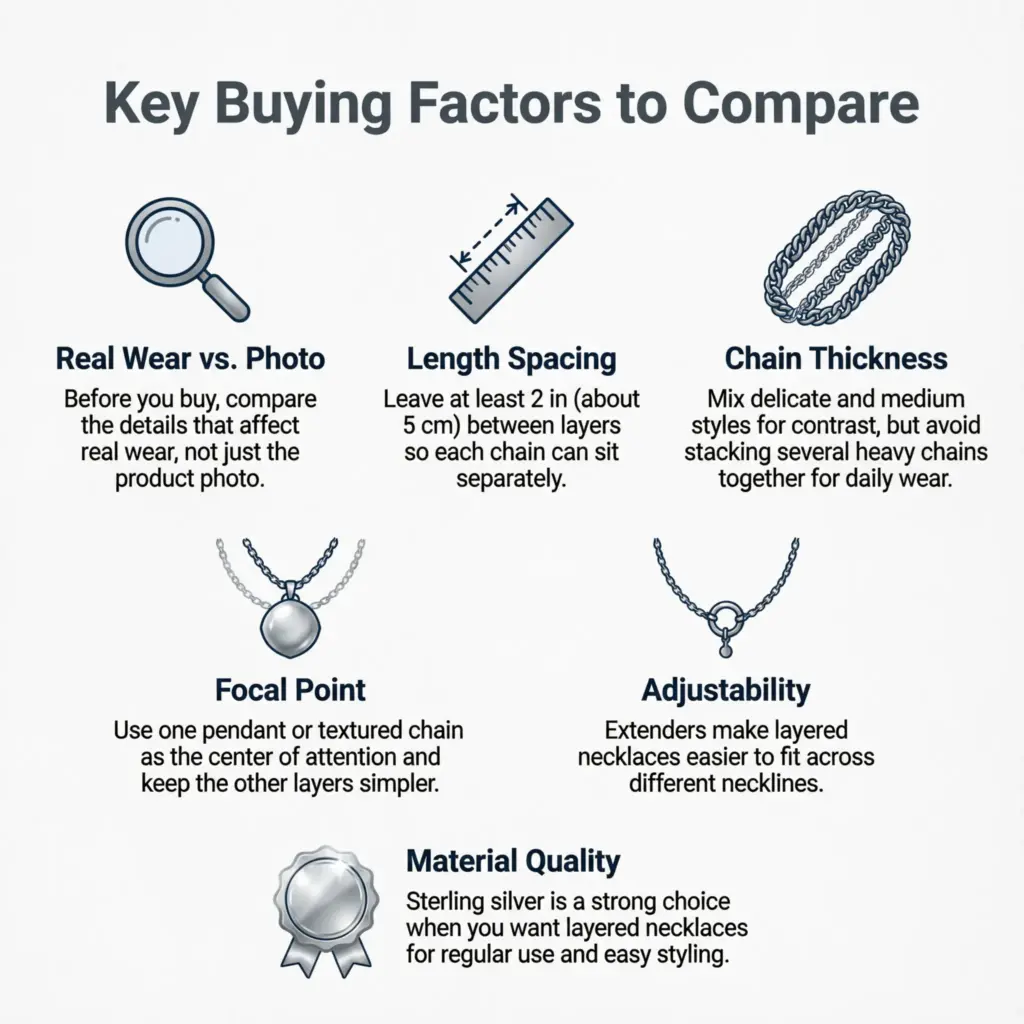
Key Buying Factors to Compare
Before you buy, compare the details that affect real wear, not just the product photo.
- Length spacing: Leave at least 2 in (about 5 cm) between layers so each chain can sit separately.
- Chain thickness: Mix delicate and medium styles for contrast, but avoid stacking several heavy chains together for daily wear.
- Focal point: Use one pendant or textured chain as the center of attention and keep the other layers simpler.
- Adjustability: Extenders make layered necklaces easier to fit across different necklines.
- Material quality: Sterling silver is a strong choice when you want layered necklaces for regular use and easy styling.
A useful rule is to think in terms of function before style. Ask whether the necklace stack is meant to be a daily default, a work-friendly set, or a more dressed-up combination for evenings and events. Once the use case is clear, it becomes much easier to choose the right lengths, chain profiles, and pendant scale. This reduces the common mistake of buying beautiful pieces that are hard to repeat-wear in real outfits.
Length and Layering Formulas That Work
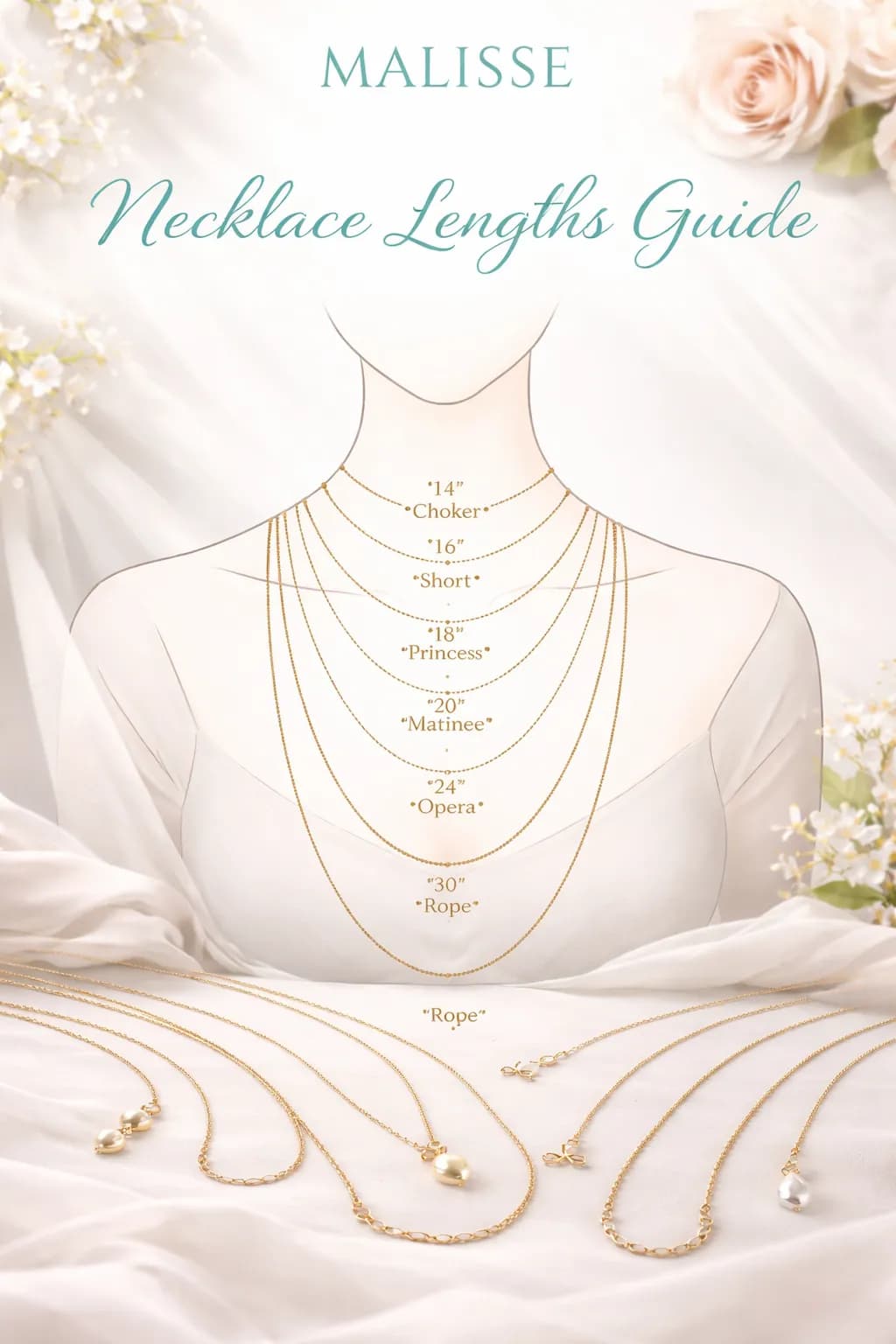
The cleanest layered necklace look usually comes from predictable spacing. These formulas work well because they create visible separation without forcing the chains too far apart.
| Layer Setup | Style Effect | Best Use Case |
|---|---|---|
| 16 in + 18 in | Simple, close, minimal stack | Everyday wear, office outfits, gifting |
| 16 in + 18 in + 20 in | Balanced layered look with clear separation | Best all-around option for most people |
| 18 in + 20 in + 24 in | Longer, more relaxed profile | Sweaters, higher necklines, evening styling |
| 16 in plain chain + 18 in texture + 20 in pendant | Built-in focal point without looking busy | Photos, events, elevated casual looks |
If you are unsure where to start, build from a short base necklace first, then add a second chain that is 2 in longer. A third layer should only be added if each piece still has visual breathing room.
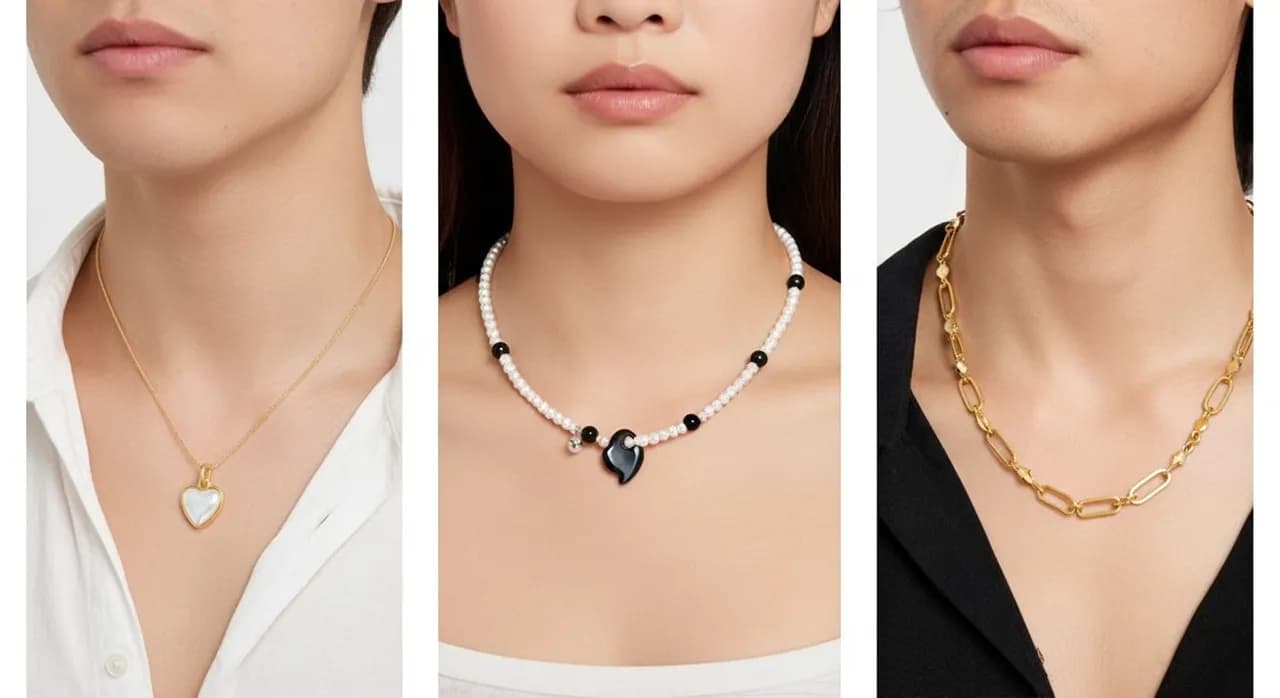
Necklines matter here more than most shoppers expect. Open collars, scoop necks, and V-necks usually work best with shorter and mid-length layers because the necklaces stay visible and frame the neckline naturally. Higher necklines, knits, and winter outfits usually need a slightly longer stack so the jewelry does not disappear into the clothing. That is why a formula that looks perfect in a product image may feel wrong in your own wardrobe if the styling context is different.
If you want a low-risk formula, keep the shortest necklace simple, let the middle necklace add a little texture, and use the longest piece for the pendant or detail. That order usually keeps the eye moving downward in a clean way, which is why it tends to look polished without much effort.
Material Quality Checks
Layered necklaces get more friction than a single chain, so material quality matters. Look for clear sterling silver labeling, consistent finish, secure clasps, and product images that show chain thickness and pendant scale. If a necklace is too light, too rough, or vague about materials, it usually becomes the weak link in the stack.
For daily use, sterling silver necklaces are a practical option because they are versatile, easy to style, and generally better suited to repeat wear than low-clarity fashion jewelry. If you want to browse current silver necklaces, start with pieces that offer simple profiles and flexible lengths.
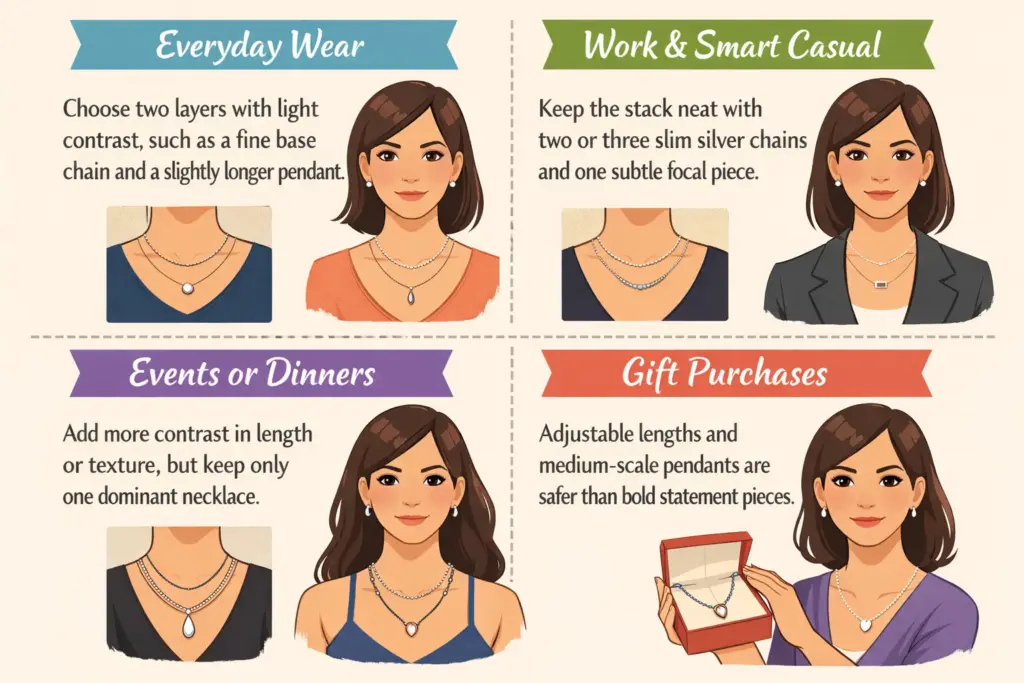
Best Options by Use Case
The best layered necklace setup depends on where you will wear it most.
- Everyday wear: Choose two layers with light contrast, such as a fine base chain and a slightly longer pendant.
- Work and smart casual: Keep the stack neat with two or three slim silver chains and one subtle focal piece.
- Events or dinners: Add more contrast in length or texture, but keep only one dominant necklace.
- Gift purchases: Adjustable lengths and medium-scale pendants are safer than bold statement pieces.
For product-led layering ideas, a sleek base such as the Sterling Silver Chain Necklace can anchor a stack well, while a slightly more detailed option like the Pavé Bead Chain Necklace can work as the focal layer.
If you prefer a softer layered look rather than a strong pendant-led stack, you can also combine minimal pieces with only a small shift in texture. That approach is often better for people who want their jewelry to work across more outfits without feeling overstyled. The most wearable layered necklaces are usually the ones that still look good when you remove one piece and wear the rest separately.
Common Mistakes to Avoid
- Using chains that are the same length, which makes the stack collapse into one line.
- Adding multiple pendants, which creates visual competition instead of balance.
- Buying based only on styled photos without checking exact measurements.
- Mixing too many thick chains when the goal is daily wear comfort.
- Ignoring clasp quality, especially if you plan to wear the set often.
Another mistake is trying to solve a weak stack by adding more necklaces. In practice, more layers rarely fix a poor combination. Two well-chosen necklaces almost always look better than four pieces fighting for space. If the stack does not work with two or three layers, the answer is usually to refine the spacing or the focal point rather than add more volume.
Care and Maintenance
Store each necklace separately when possible, fasten clasps before putting pieces away, and wipe sterling silver with a soft cloth after wear. A little maintenance reduces tangling, slows surface dullness, and keeps layered necklaces easier to style the next time you wear them.
Helpful Related Reading
If you want to refine your stack further, read our necklace lengths guide. It is useful if you are still deciding which base length will give your layered necklaces the best fit.
Ready to build your stack?
Compare top picks for this use case and start with one short base chain plus one longer accent piece.
Final Recommendation
If you want layered necklaces that stay wearable beyond one trend cycle, start with sterling silver, choose two or three lengths with at least 2 in of spacing, and keep one necklace as the focal piece. That gives you the cleanest styling result with the lowest risk of tangling or wasted purchases.
The best buying strategy is to build your stack gradually. Start with one dependable base necklace, add one complementary second layer, and only move to a third piece if the first two already work across the outfits you wear every week. That keeps the result practical, repeatable, and easier to maintain long term.
FAQ
What necklace length is best for everyday wear?
For most people, 16 in to 18 in is the most useful everyday starting range. If you want to layer, add a second necklace that is about 2 in longer.
How do I layer necklaces without tangling?
Use visible spacing between each chain, avoid equal lengths, and limit the stack to one focal pendant. Separate storage also helps reduce tangles between wears.
Are sterling silver necklaces good for daily use?
Yes. Sterling silver necklaces are a strong daily-wear option when the chain, clasp, and finish are well made. They are versatile, easy to pair with different outfits, and practical for layered styling.