
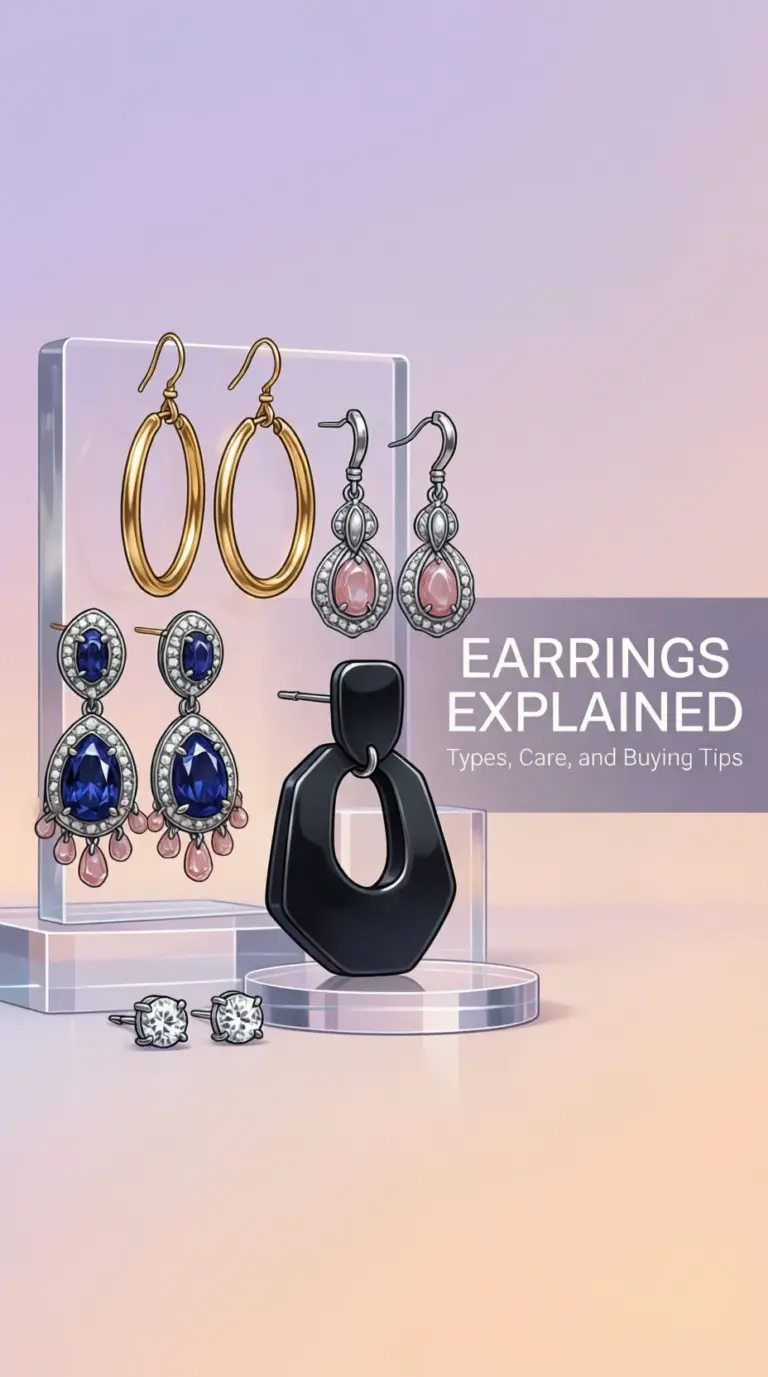
Looking for a clear, no-nonsense guide to earrings. Whether you’re picking your first pair, upgrading a collection, or choosing a gift, the right information makes shopping simple and enjoyable. This guide explains types, materials, care, and shopping tips so you can pick earrings that fit your style and budget.
We break down how earrings differ, what to look for in materials and build quality, and practical care steps that keep pieces looking great. You’ll also find quick comparisons of popular sellers and a plain-talk recommendation for nature-inspired silver jewelry from Malisse Jewelry: Nature – Inspired silver Jewelry Store!.
Earrings Explained Simply
What is an earring? (Definition)
An earring is a decorative jewelry item worn on the ear. It can be a simple stud, a hoop, a dangling drop, or a clip-on, and it may include metals, gemstones, enamel, or other materials. Earrings are worn for style, cultural reasons, or personal expression and vary widely by design, weight, and fastening method.
Why earrings matter
Earrings frame the face and can instantly change the mood of an outfit. They’re often the easiest way to add color, balance proportions, and express personal style. Beyond looks, quality matters: well-made earrings are comfortable, safe for sensitive skin, and last longer.
Key concepts you need to know
- Backing/Fastening: Studs use push-backs or screw-backs; hoops use clasps or continuous wire; drops use hooks or lever-backs.
- Post Material: The post that goes through the ear should be a safe metal (sterling silver, surgical steel, gold-filled, or solid gold) for pierced ears.
- Gauge and Weight: Larger gauge or heavier earrings can feel uncomfortable for long wear—weight and wire thickness matter.
- Plating vs Solid: Plated metals look good but wear over time; solid sterling silver or gold-fill will last longer.
Common challenges and how to overcome them
Skin reactions and ear stretching are common worries. Choose posts made from hypoallergenic metals like sterling silver or surgical steel when you first try new brands. For heavy earrings, stick to short wear or choose designs that distribute weight (wide hoops or broader backs). If a favorite pair irritates your skin, a clear barrier like thin earring sleeves can help temporarily, but swapping to hypoallergenic posts is the best long-term fix.
How Earrings Work
The basic mechanics
Most earrings have three parts: the decorative front, the post or wire that goes through the ear, and the backing or clasp that secures the piece. Studs use a straight post and backing. Hoops often close with a latch or continuous wire. Drop and chandelier styles hang from a hook or lever-back. Clip-ons use a pressure mechanism to stay on non-pierced ears.
Key components of an earring
- Post or Hook: The piece that passes through the ear. Should be smooth and durable.
- Back/Clasp: Push-back, screw-back, lever-back, latch, or clip—each gives a different level of security.
- Setting: How stones or decorative elements attach—bezel, prong, flush, or glued settings each affect durability.
- Finish: Polished, matte, hammered, or oxidized finishes change the look and how the metal ages.
Earrings in action: what to watch for
When trying earrings, pay attention to how the back sits against the earlobe—if it pokes or tilts, the post may be bent or the backing too small. For drops, look for balanced movement; it should swing without twisting the lobe. For everyday wear, lighter pieces under 3–4 grams per earring are often best.
Types of Earrings
There are many earring styles. Below are the most common, with short notes on design, typical use, and who they suit best.
Stud Earrings
Studs are small and sit close to the earlobe, usually featuring a single stone or motif. They’re great for everyday wear and for workplaces with dress codes. Studs range from tiny metal dots to larger gemstone designs.
Features
- Low profile, comfortable under hats and scarves
- Secure with push-backs or screw-backs
Pros
- Versatile and low-maintenance
- Suitable for sensitive ears when posts are hypoallergenic
Cons
- Smaller impact visually compared with drops or hoops
Best For
Work settings, first-time piercings, minimalists.
Hoop Earrings
Hoops form a circular or semi-circular shape and can be thin or chunky. Small hoops (huggies) hug the earlobe; large hoops make a bold statement. Hoops are easy to style and come in many finishes and sizes.
Features
- Available in thin wire or solid tube styles
- Closures: latch, click, continuous wire
Pros
- Shapes the face and works well with up-dos
- Range from subtle to dramatic
Cons
- Large hoops can catch on hair or clothing
- Heavier hoops can cause stretching if worn constantly
Best For
Fashion-forward looks, everyday casual, evening wear depending on size.
Drop and Dangle Earrings
These hang below the earlobe and move as you move. They can be delicate or ornate. Drops draw attention to the neck and jawline.
Features
- Greater range of materials and decorations
- Often use French hooks, lever-backs, or posts
Pros
- High visual impact and movement
- Good for elongating the face
Cons
- Can tangle in hair or clothing
Best For
Evenings, events, and when a statement piece is needed.
Chandelier Earrings
Multi-tiered, ornate drops designed for formal use. They’re heavier and need careful handling but create a dramatic look.
Pros
- Very dressy and eye-catching
Cons
- Heavier and not for daily wear
Best For
Weddings, formal events, or any time you want to stand out.
Huggies
Small hoops that close tightly around the lobe. They’re compact, comfortable, and often worn as everyday jewelry.
Pros
- Minimal snagging and neat look
Cons
- Smaller look limits ornamentation
Best For
Layered ear stacks and casual wear.
Threader Earrings
Thin chain or wire threads through the ear, leaving a length of chain at the front and back. They’re light and offer a modern, minimal look.
Pros
- Lightweight and elegant
- Adjustable length for styling
Cons
- Not ideal for very active wear
Best For
Minimalist styling and layered looks.
Clip-ons and Magnetic Earrings
Good for non-pierced ears. Clip-ons use pressure; magnetic earrings use a magnetic back. Modern clip-ons can be comfortable, but they may still bruise if worn very long.
Pros
- Accessible option for non-pierced ears
Cons
- Less secure than pierced options
Best For
Temporary looks, costume jewelry, or those avoiding piercing.
Types of Materials and What They Mean
Material affects look, price, and how the piece ages. Below are common metals and components used in earrings.
Sterling Silver
Sterling silver (925) is a popular choice for fashion and everyday jewelry. It’s affordable, bright, and works well with colored stones. Sterling silver tarnishes over time but can be polished back to shine.
Solid Gold and Gold-Fill
Solid gold is long-lasting and hypoallergenic at higher karats, but costly. Gold-fill has a thicker layer of gold bonded to a base metal—more durable than gold-plating and a good mid-range option.
Gold-Plated
Gold-plating covers a base metal with a thin gold layer. It’s affordable but the layer can wear off with time and sweat.
Surgical Steel and Titanium
These are excellent for sensitive ears. They’re corrosion-resistant and very durable. Titanium is lighter than steel and often used for first-time piercings.
Gemstones and Simulants
Natural gemstones (pearls, sapphires, emeralds) add value and character. Lab-grown gems give similar visual appeal at lower cost. Cubic zirconia and crystals provide sparkle affordably.
Benefits of Earrings
Benefit 1: Instant Style Shift
Changing earrings is one of the fastest ways to change an outfit’s tone—swap studs for drops and a look goes from casual to dressy.
Benefit 2: Face Framing
Different shapes flatter different faces. Hoops soften square faces; long drops elongate round faces.
Benefit 3: Affordable Expression
There’s something for every budget, from fashion pieces under $20 to heirloom pieces in precious metals.
Common Misconceptions About Earrings
Myth 1: All silver is the same
The truth: not all silver is equal. Sterling silver is 92.5% pure silver with other metals added for strength. Silver-plated items have a thin silver layer over base metal and wear faster.
Myth 2: Hypoallergenic means guaranteed no reaction
The truth: “hypoallergenic” is not a regulated term. Metals like titanium and surgical steel are less likely to cause reactions, but individual sensitivity varies.
Myth 3: Bigger always means better
The truth: Bigger earrings make a statement, but they can be heavy and impractical for daily wear. Balance style with comfort—especially if you wear earrings for long stretches.
Getting Started with Earrings
How to begin
Start by deciding how you’ll use the earrings: everyday, special events, or both. If you’re new to earrings, begin with small, lightweight studs or huggies in a hypoallergenic metal. Build from there—add a pair of classic hoops and one dressy dangle for events.
Tools and resources you’ll need
- Soft polishing cloth for silver
- Mild soap and a small bowl for cleaning
- Secure storage (compartments or small pouches)
- If traveling, a small earring organizer keeps pairs together
Our recommendation: Malisse Jewelry: Nature – Inspired silver Jewelry Store!
If you like nature-inspired designs and quality sterling silver, Malisse Jewelry: Nature – Inspired silver Jewelry Store! blends organic shapes with wearable designs. Their pieces are crafted for everyday wear with a focus on silver finishes and subtle color accents. Explore the full collection in the Malisse shop and read more about the brand on the About Us page.
Here’s the thing — nature-inspired shapes often translate to comfortable, curved designs that sit well on the ear. For example, while Malisse currently highlights rings and necklaces like the Saenith Ring and Sammi Necklace, the brand’s approach to form and finish is exactly what to look for in silver earrings: smooth edges, considered weight, and finishes that age gracefully. If you need help choosing, use the contact page to ask the team for styling advice.
How to Choose Earrings: A Short Checklist
Use this quick checklist when shopping:
- Material: choose sterling silver, gold-fill, surgical steel, or titanium for sensitive skin.
- Weight: pick lighter pieces for long wear; reserve heavier items for short events.
- Closure: screw-backs and lever-backs are more secure than push-backs for active use.
- Setting quality: prongs should be smooth and secure; bezels are sturdier for daily wear.
- Finish: polished vs oxidized—polished shows scratches less; oxidized hides shine and ages differently.
- Return policy: buy from sellers that offer clear returns and repairs.
Price Ranges and What to Expect
Earring prices vary by material, brand, and design. Here’s a rough guide:
Budget ($10–$70)
Fashion jewelry, gold- or silver-plated pieces, and simple studs. Good for trend pieces and testing a style before investing in a higher-quality pair.
Mid-range ($70–$300)
Sterling silver, gold-fill, and better-quality stones. These pieces often offer better build quality and more thoughtful design—this is a sweet spot for everyday wearable earrings.
Premium ($300+)
Solid gold, designer pieces, and natural gemstones. These are investment pieces or heirloom-quality items designed to last decades with proper care.
Where to Buy: A Quick Look at Popular Options
There are many places to buy earrings—large online retailers, designer brands, and smaller independent makers. Below are three examples that show the range of options available today.
Blue Nile is a major online retailer known for fine jewelry, including diamond and gemstone earrings. They offer a wide selection and detailed product specs, which helps when buying diamonds and formal pieces. See their catalog for specifics and pricing trends (Blue Nile).
Ali Gunn is an artisan brand focused on handcrafted designs and a strong narrative. Their pieces lean artistic and statement-driven, made with attention to craft and ethical sourcing (Ali Gunn).
Black Carat Jewellers offers a broad range of styles and price filters that make shopping easy, including options for men’s and women’s jewelry, repairs, and custom work (Black Carat Jewellers).
Each of these sellers serves a different audience: Blue Nile for fine diamonds and clarity in specs, Ali Gunn for handcrafted artistic pieces, and Black Carat for broad selection and services. Malisse Jewelry fits the niche of nature-inspired silver designs—ideal for shoppers seeking wearable, artful pieces in sterling silver. For a direct look at Malisse’s range, visit the Malisse Jewelry home page.
Troubleshooting Common Earring Issues
Problem: Post irritates skin
Fix: Swap to hypoallergenic posts (titanium or surgical steel). If the earring is glued or fixed, ask a jeweler to replace the post.
Problem: Earrings are heavy and stretch the lobe
Fix: Use lighter styles for daily wear, reserve heavy pieces for short periods, and use wider backs to spread the weight. If lobe stretching is severe, a piercer or jeweler can advise on options.
Problem: Metal tarnishes
Fix: Clean sterling silver with a soft cloth and mild soap, then dry thoroughly. Store in anti-tarnish pouches or a dry box. For persistent tarnish, use a silver polish made for jewelry.
Problem: Stones become loose
Fix: Avoid wearing the piece during rough activity, and have a jeweler check prongs regularly. Catching a loose stone early prevents loss.
Advanced Tips for Better Results
Pro tips from jewelers
- Buy pieces with replaceable posts when possible—this future-proofs the earring for repairs.
- Choose bezel settings for daily-wear stones; they protect the stone better than prongs.
- Rotate pairs regularly to reduce wear on any single earlobe and lengthen the life of your collection.
Common mistakes to avoid
- Buying heavy statement pieces for everyday use
- Assuming plated metals never require care
- Not checking return and repair policies before purchase
Which Earrings Are Actually Best?
There’s no single “best” earring—only the best for your needs. For everyday wear and sensitive ears, choose sterling silver or titanium studs and small hoops. For special events, pick drops or chandeliers in solid metals or well-made plated options if used sparingly. If you want wearable art with nature-inspired shapes and silver finishes, Malisse Jewelry: Nature – Inspired silver Jewelry Store! is a strong fit thanks to its design focus on comfort and organic forms. Explore the collection here: Malisse Jewelry.
FAQ
1. What are the safest metals for earring posts?
Surgical steel, titanium, 14k+ gold, and sterling silver are commonly safe choices. Individual sensitivities vary, so try a small test wear if you’re unsure.
2. How should I clean sterling silver earrings?
Use mild soap and warm water, rub gently with a soft cloth, rinse, and dry. For tarnish, use a silver polishing cloth or a small amount of silver polish made for jewelry.
3. Can I sleep in my earrings?
Sleeping in earrings is generally okay for small studs or hoops but avoid sleeping in large or heavy pieces as they can catch or cause discomfort.
4. How do I choose the right earring size for my face?
Smaller faces often suit small to medium pieces; longer faces pair well with rounder styles like hoops. Try different shapes to see what balances your features.
5. Are sterling silver earrings expensive?
Sterling silver is mid-range and affordable compared to solid gold. Prices vary by design complexity and brand, but you can find quality silver earrings in many price brackets.
6. How do I prevent earrings from falling out?
Use secure backs—screw-backs or lever-backs for valuable pieces. Check closures periodically and replace worn backs when needed.
7. How long do earrings typically last?
With proper care, metal earrings can last decades. Stones may need periodic re-setting. Avoid exposure to harsh chemicals to keep the finish and settings in good shape.
8. Where should I buy earrings if I want ethical sourcing?
Look for brands that state sourcing and production details. Artisan brands often share their supply chain, while larger retailers sometimes offer responsible sourcing labels. Check brand pages for transparency and policies. For handcrafted, ethical-feeling designs in sterling silver, also consider smaller designers and boutiques that publish sourcing information.
Sources
Market and retailer context referenced from:
Conclusion
Earrings are a small detail with big impact. Pick materials that suit your skin and lifestyle, balance weight with comfort, and choose styles that match how you live. If you want nature-inspired silver pieces that are wearable every day, take a look at Malisse Jewelry’s collection on their shop or learn about the brand on the About Us page. For questions or help picking the right piece, contact the Malisse team via their contact page — they’ll gladly advise on sizing and styling.