
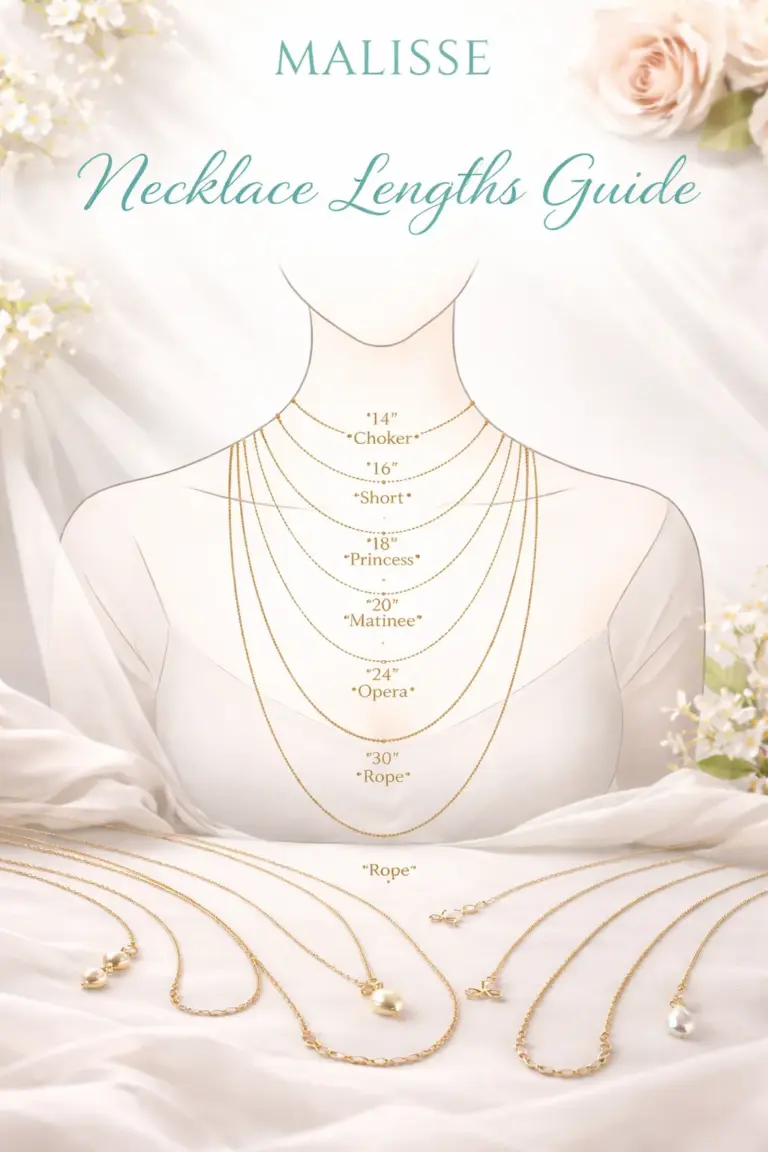
Choosing the right necklace length is the fastest way to make a necklace look intentional.
If the chain length is wrong, even a beautiful piece can feel awkward, hard to style, or uncomfortable. This guide gives you a practical way to choose the best fit for daily wear, layering, and gifting.
Instead of relying on guesswork, trend photos, or vague product descriptions, it helps to understand how necklace length changes the overall look of an outfit. A small adjustment in chain length can make a necklace feel more balanced, more flattering, and much easier to wear across different occasions.
Quick Answer
If you want one safe everyday length, start with 40–45 cm (16–18 in). It works with most necklines and outfits, and it is the easiest base for layering.
This range is often the best starting point because it gives you enough visibility without feeling too tight or too long. It also works well if you plan to add a second chain later, which makes it the most practical choice for building a small, wearable jewelry rotation.
Necklace Length Chart (Practical Use)
- 35–40 cm (14–16 in): close to the neck, choker styling
- 40–45 cm (16–18 in): everyday default for most people
- 50–55 cm (20–22 in): ideal for layered looks
- 60+ cm (24+ in): longer statement profile
How to Choose Your Length in 3 Steps
- Pick your use case: daily, office, event, or layering
- Match to neckline: shorter for open necklines, longer for high necks
- Choose adjustable chains when unsure
Best Length by Use Case
- Daily wear: 40–45 cm
- Layered styling: 45–55 cm plus one shorter base
- Gift purchase: adjustable 40–50 cm range
- Statement pendant: 50–60 cm depending on pendant size
Common Mistakes
- Buying only from photos without length specs
- Choosing non-adjustable chains for gifts
- Using equal chain lengths when layering
Internal Styling Tip
Pair this guide with your collection page for fast selection: Shop silver necklaces.
How Neckline and Fabric Change the Right Length
Necklace length should match the structure of the clothes you wear most often. Open necklines usually work best with shorter chains, while high necklines need extra length so the necklace does not get visually lost. Fabric also matters: heavier knits and jackets often need slightly bolder chain presence than light tops.
A practical rule is to test your necklace against three outfit types you wear weekly: one casual, one work outfit, and one evening outfit. If one length works across all three, that is your high-utility default.
This matters because the right necklace length is not only about body proportions. It is also about how often the piece works with your real wardrobe. A necklace that looks perfect with one dress but disappears under most of your tops usually has lower day-to-day value than a piece that works across several outfit types.
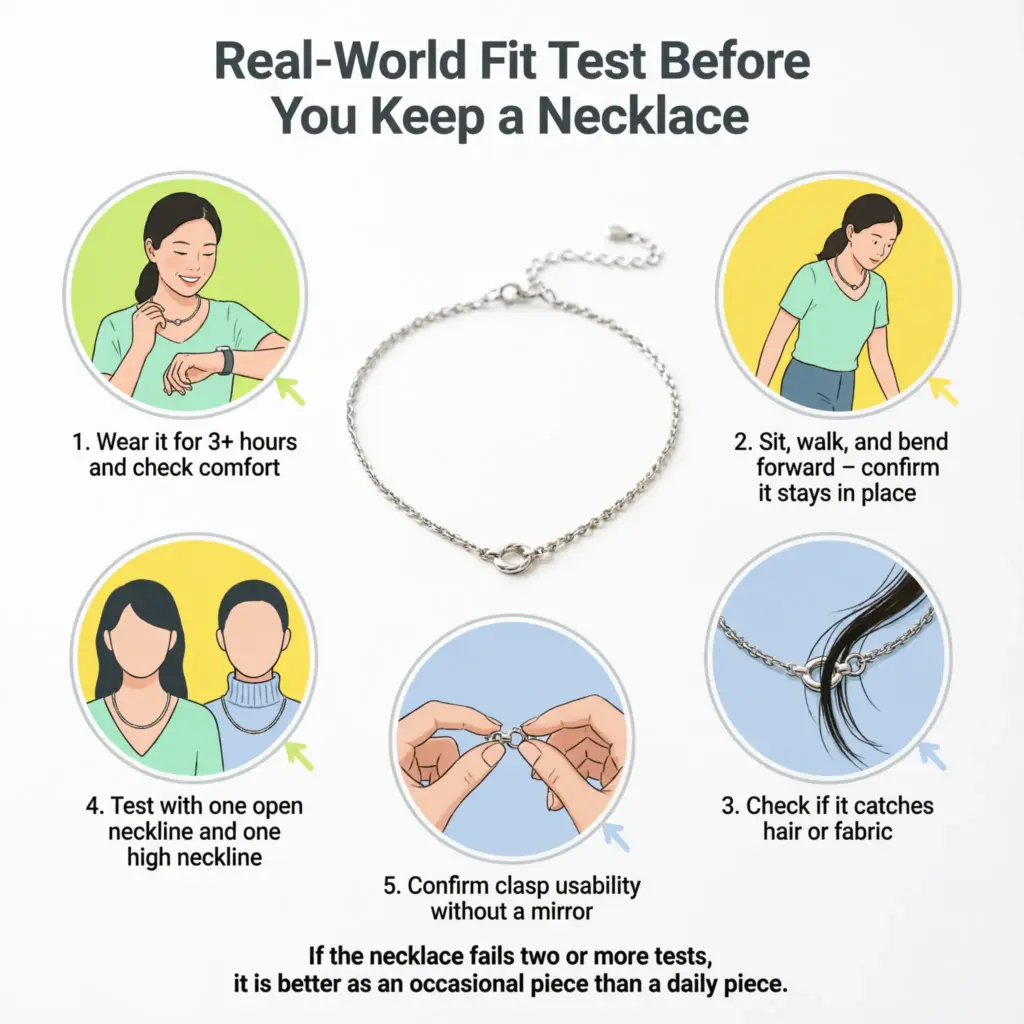
Real-World Fit Test Before You Keep a Necklace
Use this 5-point fit test after purchase:
- Wear it for 3+ hours and check comfort.
- Sit, walk, and bend forward—confirm it stays in place.
- Check if it catches hair or fabric.
- Test with one open neckline and one high neckline.
- Confirm clasp usability without a mirror.
If the necklace fails two or more tests, it is better as an occasional piece than a daily piece.
This kind of quick wear test is useful because many buying mistakes only show up after a few hours of real use. A necklace can look good in the mirror for a minute and still become annoying once it starts shifting, catching fabric, or feeling awkward during normal movement.
Layering Combinations by Confidence Level
If you are new to layering, begin simple:
- Beginner: 2 layers, one plain + one pendant
- Intermediate: 3 layers, one focal point only
- Advanced: mixed textures and controlled contrast
Avoid buying three similar chains. Variety in length and texture is what creates a clean layered look.
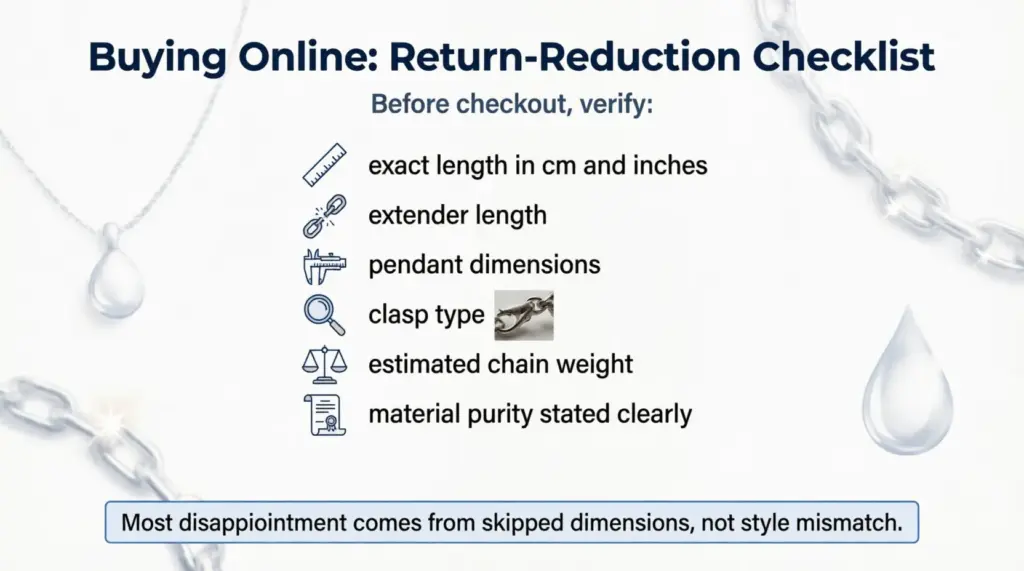
Buying Online: Return-Reduction Checklist
Before checkout, verify:
- exact length in cm and inches
- extender length
- pendant dimensions
- clasp type and close-up image
- estimated chain weight
- material purity stated clearly
Most disappointment comes from skipped dimensions, not style mismatch.
When shopping online, dimensions are often the difference between a piece that feels polished and one that feels underwhelming. Many returns happen because buyers imagine a chain or pendant differently from its actual size, so checking measurements is one of the simplest ways to make better decisions before checkout.
Gifting Decision Guide
When buying for someone else, choose flexibility over boldness:
- adjustable chain length
- medium pendant size
- neutral sterling silver finish
- easy clasp design
This combination reduces gift risk and increases repeat wear.
If you are unsure about the recipient’s personal style, it is usually smarter to choose versatility over strong design statements. A flexible sterling silver necklace with an easy fit has a much better chance of becoming a regular favorite than a more dramatic piece that only suits specific outfits.
Decision Matrix: Pick the Best Option Faster
If you are comparing two or three products, score each from 1 to 5 on these criteria:
- comfort for 6+ hour wear
- fit flexibility (adjustability/sizing confidence)
- material clarity and quality signals
- styling versatility across your current wardrobe
- price-to-value confidence
Add the scores and choose the highest practical total. This avoids impulse purchases based only on photos.
7-Day Wear Test
After purchase, track how often you actually wear the piece over one week.
- If you wear it 3+ times comfortably, it is a strong keeper.
- If you avoid it, check whether fit, weight, or styling friction is the problem.
- If discomfort appears quickly, prioritize comfort replacements over visual upgrades.
This simple test helps you build a collection you truly use.
Comparison Snapshot (What Usually Wins)
In most cases, the best first purchase is:
- medium scale (not smallest, not boldest)
- versatile sterling silver finish
- fit-adjustable where possible
- easy to combine with at least five existing outfits
This profile has the highest repeat-wear probability.
Budget Strategy
Use a base-first strategy:
- buy one reliable daily piece
- buy one secondary style for variation
- buy trend-heavy items only after daily coverage is solved
This protects your budget and keeps your collection functional.
It also helps you avoid building a collection around impulse purchases. When you solve your everyday needs first, every additional necklace becomes easier to judge because you can compare it against pieces you already know you wear often.
Product Suggestions
If you want quick options that match this category, start with:
Final Buying Framework
Score each option from 1 to 5 for comfort, fit range, outfit compatibility, and value. Keep the one with the highest practical score, not the trendiest look.
Final Recommendation
Start with one adjustable silver necklace in the 40–45 cm range, then add a second longer chain for layering. That gives the most styling flexibility with the least risk.
For most buyers, this is the lowest-risk way to build a useful necklace collection. It covers everyday wear first, leaves room for layering later, and makes it easier to choose future pieces based on how they actually fit into your wardrobe rather than how they look in isolation.
FAQ
Can one necklace replace a full collection?
Not completely, but one adjustable medium-length necklace can cover most daily situations.
Is pendant size as important as chain length?
Yes. A large pendant on a short chain can look crowded, while a very small pendant on a long chain may disappear.
Should I buy multiple lengths at once?
Only if you already know your best fit. Otherwise, buy one adjustable base necklace first.
What necklace length is best for everyday wear?
For most people, 40–45 cm is the most versatile range.
How do I layer necklaces without tangling?
Use at least 5 cm difference between each chain length and keep one clear focal piece.
Should I choose adjustable chains?
Yes, especially for gifts or mixed outfit use.
Should I buy trend pieces first?
Usually no. Build a dependable base first, then add trends.
What matters more: looks or comfort?
For high-use jewelry, comfort wins long-term.
How do I avoid low-utility purchases?
Use the decision matrix and the 7-day wear test before expanding your collection.