
So you’ve seen that little “925” stamp on a ring or necklace and wondered what it means. Maybe a friend told you sterling silver is “the good stuff” but didn’t explain why. I’ve been working with silver for over 15 years now, and honestly? Most people get confused about this. Thats completely normal.
Sterling silver jewelry remains one of the most popular choices for rings, earings, bracelets, and necklaces worldwide. But what makes it different from pure silver or those cheap silver-plated pieces that turn your skin green after a week? This guide breaks down everthing you need to know about 925 sterling silver jewelry, from composition to care.
What Does “Sterling Silver” Actually Mean?
Sterling silver is an alloy. That means its a mix of metals, not just one pure element. The exact composition is 92.5% pure silver and 7.5% other metals, usually copper. Why add copper? Pure silver is way too soft for jewelry. I learned this the hard way years ago when I tried making a ring from fine silver. Beautiful piece. Bent within a week of regular wear.
The copper content gives sterling silver its strength and durability while keeping that gorgeous silver shine people love. Some manufacturers use zinc or nickel instead of copper, but copper remains the traditional choice. Its worth noting that nickel can cause allergic reactions in some people, so if your skin is sensitive, always check whats in the alloy mix.
Here’s something interesting that most articles wont tell you. The term “sterling” likely comes from old English currency. English silver pennies were called “sterlings” and they contained the same 92.5% silver purity. The name stuck around for centuries. Pretty cool bit of history for a piece of jewelry, right?
When someone asks “is sterling silver good jewelry?” the answer is absolutely yes. It offers an excellent balance between purity, strength, and affordability. Gold and platinum are beautful but expensive. Sterling silver gives you that same quality look without emptying your wallet. Ive seen sterling pieces from my grandmother that still look amazing after 50 years with proper care.
The 7.5% copper also affects how the silver behaves over time. It causes that darkening effect called tarnish. Some people hate it, but I actually like a bit of tarnish on certain designs. It adds character and highlights details in the metalwork. But more on care and cleaning later.
The 925 Stamp Explained: Why It Matters
That tiny “925” you see stamped on your jewelry? Its a hallmark that tells you exactly what your buying. The number represents the silver content: 925 parts per 1000, or 92.5%. Simple math. Other stamps you might encounter include “SS”, “Ster”, or “Sterling” but 925 is the most universally recognized.
Now heres where it gets tricky. Just because something has a 925 stamp doesnt automatically mean its genuine. Counterfeit jewelry exists, unfortunately. I’ve tested pieces at flea markets that had the 925 stamp but contained zero actual silver. They were silver-plated brass at best. The stamp was completely fake.
| Stamp | Meaning | Silver Content |
|---|---|---|
| 925 | Sterling Silver | 92.5% |
| 999 | Fine/Pure Silver | 99.9% |
| 900 | Coin Silver | 90% |
| 800 | European Silver | 80% |
| SP or EPNS | Silver Plated | Surface layer only |
Different countries have different hallmarking systems. In the UK, you’ll often see additional marks indicating the assay office that tested the piece and the year it was made. These marks can help authenticate antique or vintage sterling silver jewelry. American pieces typically just use the 925 or “Sterling” stamp without additional markings.
Why does all this matter? Because 925 sterling silver jewelry holds its value and lasts for generations. That cheap plated stuff from the mall kiosk? It’ll look terrible in six months. Real sterling silver can be passed down as heirlooms. The initial investment pays off.
If your buying online, always check that the seller specifies “925 sterling silver” and not just “silver-tone” or “silver color.” Those terms mean nothing about actual silver content. They’re marketing speak for “this contains zero silver whatsoever.” Trust me on this one.
Sterling Silver vs Pure Silver vs Silver Plated
People mix these up all the time. Lets clear up the confusion once and for all.
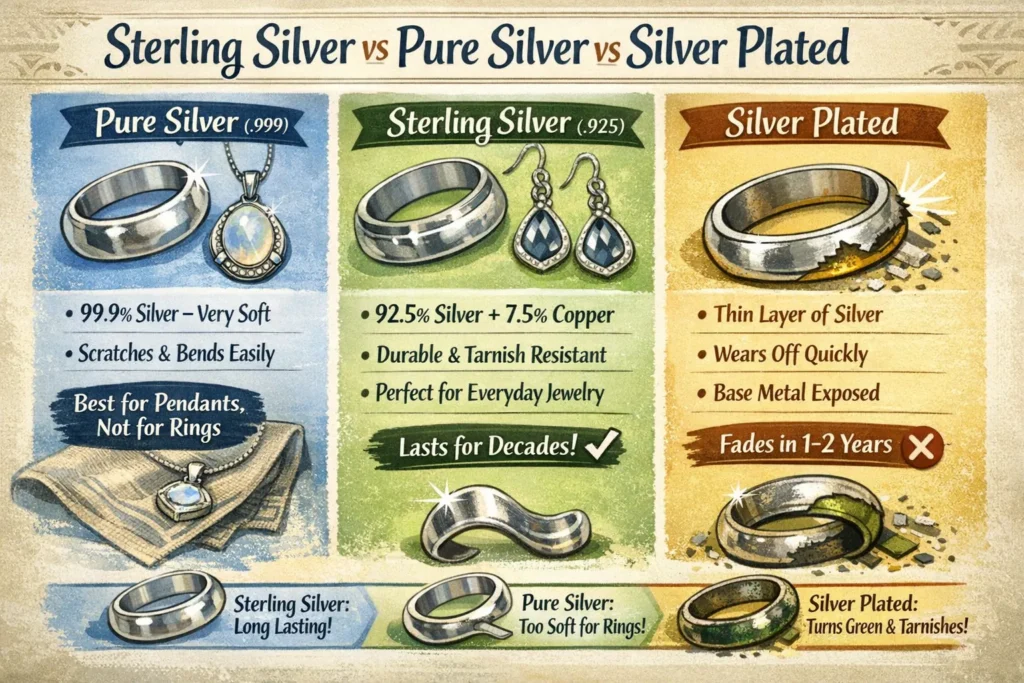
Pure Silver (also called fine silver or .999 silver) contains 99.9% silver. It’s gorgeous but impractical for most jewelry. Too soft. A pure silver ring would scratch and dent constantly. The only jewelry applications where pure silver works well are pieces that wont get bumped or stressed, like pendants that sit against fabric.
Sterling Silver is that 92.5% silver alloy we’ve been discussing. Strong enough for daily wear, beautiful enough for special occasions. The sweet spot for jewelry, really.
Silver Plated jewelry has a base metal (usually brass, copper, or nickel) covered with a thin layer of silver. Very thin. Were talking microns here. The silver layer wears off with use, exposing the base metal underneath. Thats when you get that green or black discoloration on your skin. Not a good look.
- Sterling silver rings can last decades with basic care
- Silver plated rings typically show wear within 1-2 years
- Pure silver rings would deform too easily for practical wear
How do you tell them apart if theres no stamp? A simple acid test works, though it requires a testing kit. You can also check the price. Real sterling silver has an inherent material cost. If someones selling a “silver” ring for $3, its not sterling. The raw silver alone would cost more than that.
Another method I use is the ice test. Place an ice cube on the piece. Sterling silver conducts heat extremely well, so the ice melts noticeably faster than it would on plated or fake silver. Its not 100% conclusive, but combined with other observations, it helps confirm authenticity.
Silver plated items do have their place. For costume jewelry or pieces you’ll only wear a few times, plating saves money. Just don’t expect longevity. And if someone’s selling silver-plated jewelry at sterling silver prices? Walk away. Fast.
Is Sterling Silver Good for Everyday Jewelry?
Short answer: absolutely. Longer answer: it depends on your lifestyle and how you treat your jewelry.
Sterling silver handles daily wear remarkably well. Ive worn the same sterling silver wedding band every single day for 12 years. Still looks great. Sure, it has some minor scratches that add character, but the metal itself remains solid and the finish can be polished back to new whenever I want.
That said, certain activities will damage any jewelry, including sterling silver:
- Swimming in chlorinated pools (chlorine reacts with silver)
- Gardening or working with chemicals
- Heavy manual labor that could scratch or dent the metal
- Applying lotions, perfumes, or hairspray while wearing jewelry
Is sterling silver good for jewelry you’ll wear to work, dinner, the gym? Generally yes. Is it good for jewelry you’ll wear while cleaning with bleach? Absolutely not. Common sense applies here. Remove your pieces before doing anything harsh.
For people who want jewelry they can essentially “set and forget,” sterling silver works well but requires occasional cleaning to prevent heavy tarnish buildup. Im talking maybe 10 minutes of cleaning every few months. Not exactly a major commitment. Some of my clients prefer the aged, slightly tarnished look anyway.
Temperature changes dont bother sterling silver. Unlike some materials that expand and contract noticeably, your silver ring will feel the same in winter as summer. This makes it practical for climates with significant seasonal variation.
One exception: if you work in healthcare or food service and need to wash your hands constantly, you might notice faster tarnishing. The soap, water, and sanitizer exposure accelerates oxidation. Either remove your jewelry before shifts or accept more frequent cleaning.
Sterling Silver for Sensitive Skin: What You Should Know
Got sensitive skin? This section is especially for you.
Pure sterling silver itself is hypoallergenic for most people. The problem comes from that 7.5% alloy component. If the manufacturer used nickel instead of copper, and you have a nickel allergy, youll react. Nickel allergies are surprisingly common. About 10-15% of the population has some level of nickel sensitivity.
How do you know if a piece contains nickel? Ask the seller directly. Reputable jewelers will know the exact composition of their alloys. If they cant tell you or seem unsure, thats a red flag. Quality makers use copper exclusively in their sterling silver for this exact reason.
I had a customer once who thought she was allergic to all silver jewelry. Turns out she’d only ever worn cheap sterling with nickel alloy. We switched her to nickel-free pieces and zero problems since. Complete game changer for her.
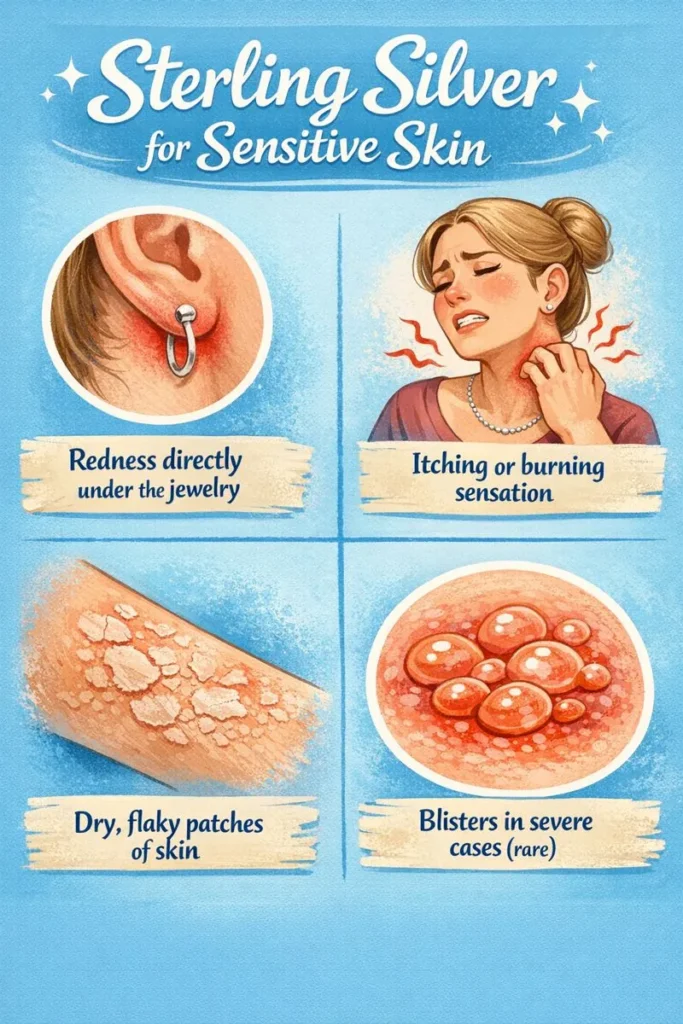
Signs of a metal allergy include:
- Redness directly under the jewelry
- Itching or burning sensation
- Dry, flaky patches of skin
- Blisters in severe cases (rare)
If your experiencing these symptoms, remove the jewelry immediately and give your skin time to heal. Then try a piece you know is nickel-free. If the reaction continues with confirmed nickel-free sterling silver, you may have a genuine silver allergy, though these are extremely rare.
Some people confuse tarnish transfer with allergic reactions. When tarnished silver contacts skin, it can leave a gray or greenish mark. This isnt an allergy. Its just oxidized metal transferring to your skin. It washes off easily and doesnt cause irritation. Clean your jewelry to prevent this.
For those with very sensitive skin, rhodium-plated sterling silver offers another option. Rhodium is a platinum-group metal thats completely non-reactive. The plating creates a barrier between your skin and the silver alloy underneath. The downside? Rhodium plating eventually wears off and needs reapplication.
How to Identify Authentic Sterling Silver
We touched on stamps earlier, but lets go deeper. Knowing how to spot real sterling silver jewelry saves you money and disappointment.
The Stamp Test: Look for 925, Sterling, Ster, or SS markings. Use a magnifying glass for small pieces. Check inside ring bands, on clasp mechanisms, or near the bail on pendants. Not finding a stamp doesnt automatically mean the piece is fake, especially on very old or handmade items, but it does warrant further investigation.
The Magnet Test: Silver is not magnetic. Hold a strong magnet near the piece. If it sticks, the core metal is steel or iron, not silver. Silver-plated steel will fail this test. Keep in mind that silver’s alloy components like copper are also non-magnetic, so a piece that doesnt attract magnets could still be fake if it uses non-magnetic base metals.
The Smell Test: Sterling silver has no smell. If a piece smells metallic or like brass, it probably isnt genuine silver. This test works better than youd expect. Our noses are sensitive to certain metals, and real silver simply doesnt trigger that response.
The Sound Test: Tap the piece gently with another metal object. Real silver produces a clear, high-pitched ringing sound that sustains for a moment. Fake silver or plated pieces make a duller, shorter sound. This takes practice to recognize, but once you hear the difference, you wont forget it.
Professional Testing: For valuable pieces or when you need certainty, take the jewelry to a professional jeweler. They can perform acid tests that definitively determine silver content. Some jewelers offer this service free or for a small fee. Worth it for antiques or expensive purchases.
| Test | Real Sterling Silver | Fake/Plated |
|---|---|---|
| Magnet | No attraction | May attract |
| Smell | No odor | Metallic smell |
| Sound | High, clear ring | Dull thud |
| Ice | Melts quickly | Melts normally |
| Tarnish | Darkens over time | May peel or flake |
The tarnish observation is actually useful for identification. Real sterling silver tarnishes evenly across the surface. Plated items show patchy wear patterns where the base metal is exposed. Look for areas of different color, especially on edges and high-wear spots. These inconsistencies reveal plating.
Sterling Silver Price: What to Expect to Pay
How much should 925 sterling silver jewelry cost? Thats complicated because price depends on way more than just metal content.
First, understand that silver itself trades as a commodity. Prices fluctuate daily based on markets. As of recent times, silver hovers around $25-30 per troy ounce, though this changes constantly. A simple sterling silver ring might contain $5-15 worth of actual silver by weight. So where does the rest of the price come from?
Labor is the big one. A handcrafted piece from a skilled artisan costs more than a mass-produced factory piece using the same amount of silver. Both are “real sterling silver” but the craftsmanship differs dramatically. Ive seen handmade sterling rings range from $50 to $500 depending on complexity and the artist’s reputation.
Brand markup also plays a role. A sterling silver chain from Tiffany & Co. costs significantly more than an identical-looking chain from a lesser-known maker. Your paying for the brand name, the fancy box, and the retail experience. The actual metal value is similar.
General pricing ranges to expect:
- Simple sterling silver bands: $20-50
- Sterling silver earrings: $25-100
- Sterling silver necklaces: $40-200
- Designer or artisan pieces: $100-500+
- Antique or vintage sterling: Highly variable based on age and condition
Be suspicious of prices that seem too good. That “sterling silver” ring for $5 shipped free from overseas? Probably not real. The shipping alone would cost more than that. Sellers undercutting market value dramatically are usually selling plated goods with fake stamps.
Conversely, don’t assume expensive always means better. Some retailers massively overcharge for basic sterling pieces. Shop around, compare prices for similar items, and buy from sellers who clearly disclose materials and sourcing.
Investing in fewer, higher-quality sterling silver pieces makes more sense than accumulating lots of cheap jewelry. Quality pieces last decades. Cheap ones end up in a drawer after a year.
Caring for Your Sterling Silver Jewelry
Good news: sterling silver care isnt complicated. A few simple habits keep your pieces looking beautiful for years. Bad news: completely neglecting your silver will result in heavy tarnish that requires more effort to remove. Balance is key.
Storage matters. Keep sterling silver in a dry place, ideally in individual pouches or lined jewelry boxes. Pieces touching each other can cause scratching. Humidity accelerates tarnish, so avoid storing jewelry in bathrooms. Those little anti-tarnish strips you find in jewelry packaging? They actually work. Throw one in your storage box.
Regular wearing helps. This surprises people, but jewelry worn frequently often tarnishes less than stored pieces. The friction from contact with skin and fabric actually polishes the surface. My everyday ring looks better than pieces I pull out twice a year. Ironic, right?
Cleaning routine: For light tarnish, use a soft polishing cloth made specifically for silver. These cloths contain compounds that gently remove oxidation without scratching. For heavier tarnish, warm water with a drop of mild dish soap and a soft-bristle brush works wonders. Rinse thoroughly and dry completely.
What to avoid when cleaning:
- Abrasive cleaners or scrubbing pads
- Toothpaste (despite the old wives’ tale, its too abrasive)
- Harsh chemicals like bleach or ammonia
- Ultrasonic cleaners for pieces with gemstones (can loosen settings)
The baking soda and aluminum foil trick works for very tarnished pieces. Line a bowl with foil, add hot water and a tablespoon of baking soda, then submerge your silver for a few minutes. The chemical reaction transfers tarnish from silver to aluminum. It’s like magic, honestly. Ive rescued some truly blackened pieces this way.
After any cleaning, dry your jewelry completely before storing. Moisture left in crevices causes localized tarnish and can damage certain gemstone settings over time. A hair dryer on low heat works well for getting into tight spots.
Professional cleaning is an option too. Jewelers offer cleaning services, sometimes free with purchase. They have tools and solutions not available to consumers. For heirloom or valuable pieces, professional cleaning every year or two makes sense.
Frequently Asked Questions
Is 925 sterling silver real silver?
Yes, 925 sterling silver contains 92.5% pure silver. The “925” stamp indicates this silver content. The remaining 7.5% is typically copper, which adds durability. Sterling silver is considered “real silver” in the jewelry industry and has been the standard for quality silver jewelry for centuries.
Does sterling silver turn your finger green?
Sterling silver itself doesn’t usually cause green skin. However, the copper component in the alloy can react with your skin’s acidity and leave a harmless green mark, especially in humid conditions or if the jewelry is heavily tarnished. This isn’t an allergy—just a chemical reaction. Keeping your jewelry clean and dry prevents this issue.
Can you wear sterling silver in the shower?
You can, but you probably shouldnt make a habit of it. Water exposure speeds up tarnishing, and soap residue can dull the shine over time. Chlorinated water (like pools) is particularly damaging. For best results, remove sterling silver jewelry before showering, swimming, or any water activity.
How long does sterling silver jewelry last?
With proper care, sterling silver jewelry lasts generations. The metal itself doesn’t degrade. Tarnish is just surface oxidation that cleans off easily. Ive seen sterling silver pieces from the 1800s that still look gorgeous. The lifespan depends entirely on how well you maintain it.
Is sterling silver better than gold plated?
For longevity, yes. Sterling silver is solid metal all the way through. Gold plating is a thin layer over a base metal that wears off with time. Once the plating is gone, your left with exposed base metal. Sterling silver may tarnish, but the tarnish polishes away. You can’t polish back worn-off gold plating. For jewelry meant to last, sterling silver offers better value.