
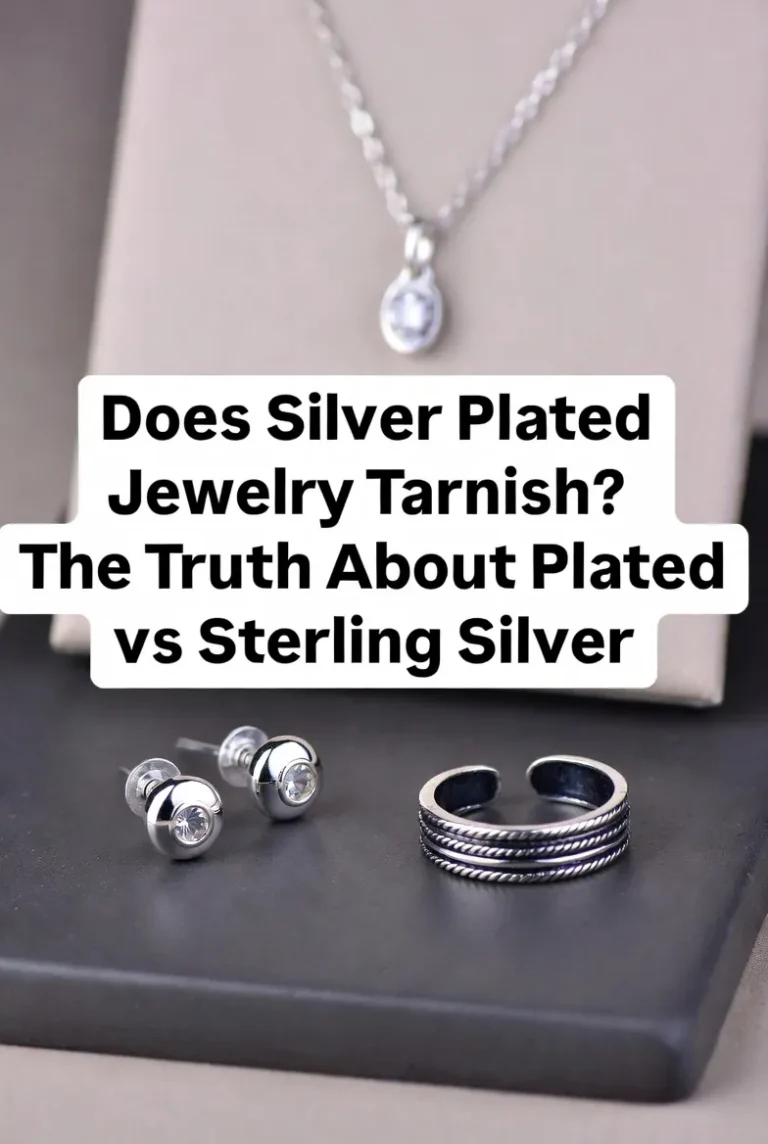
So you bought a beautiful silver plated necklace last month, and now its got those weird dark spots all over it. Sound familar? Yeah, silver plated jewelry does tarnish, and it happens quicker than most people expect. I’ve been working with silver jewelry for over twelve years now, and this question comes up more than any other.
The short answer is yes – silver plated jewelry will tarnish. But theres alot more to it than that. How fast it tarnishes, why it happens, and what you can do about it depends on several factors that most jewelry sellers won’t tell you about.
What Is Silver Plated Jewelry? (Definition & Process)
Silver plated jewelry is exactly what it sounds like – a base metal with a thin layer of silver on top. The base metal is usualy copper, brass, or nickel, and the silver coating gets applied through electroplating. During this process, the jewelry piece sits in a chemical solution while electric current deposits silver molecules onto the surface.
The silver layer on plated jewelry is extremely thin. We’re talking about 0.5 to 2.5 microns typically. A human hair is about 70 microns thick, so the silver coating on your plated bracelet is maybe 30 to 140 times thinner than one of your hairs.
| Type | Silver Content | Durability | Price Range |
|---|---|---|---|
| Silver Plated | Surface layer only (0.5-2.5 microns) | Low – wears off | $5-$50 |
| Sterling Silver (925) | 92.5% pure silver throughout | High | $30-$300+ |
| Fine Silver (999) | 99.9% pure silver | Medium | $50-$500+ |
The main reason silver plated jewelry exists is price. You get that silver look without the silver cost. But heres the thing – that cheap price comes with trade-offs.
Yes, Silver Plated Jewelry Does Tarnish – Here’s Why
Will silver plated jewelry tarnish? Absolutely. Can silver plated jewelry tarnish faster than solid silver? Yes, and thats the frustrating part.
Tarnishing happens because of a chemical reaction between silver and sulfur compounds in the air. Hydrogen sulfide is the main culprit – its found in pollution, certain foods, rubber bands, and even your body’s oils. When sulfur touches silver, it creates silver sulfide, which is that dark coating you see.
The process works like this:
- Silver atoms contact sulfur in the air
- A chemical reaction creates silver sulfide
- Silver sulfide appears as darkening on the metal
- More exposure means more tarnish buildup
Silver plated jewelry tarnishes faster because the plating is often not as pure as sterling. Also, as plating wears thin in spots, those areas tarnish even quicker. I’ve seen pieces start tarnishing within a week of regular wear. One customer brought in a necklace worn only three times and it already had noticable darkening.
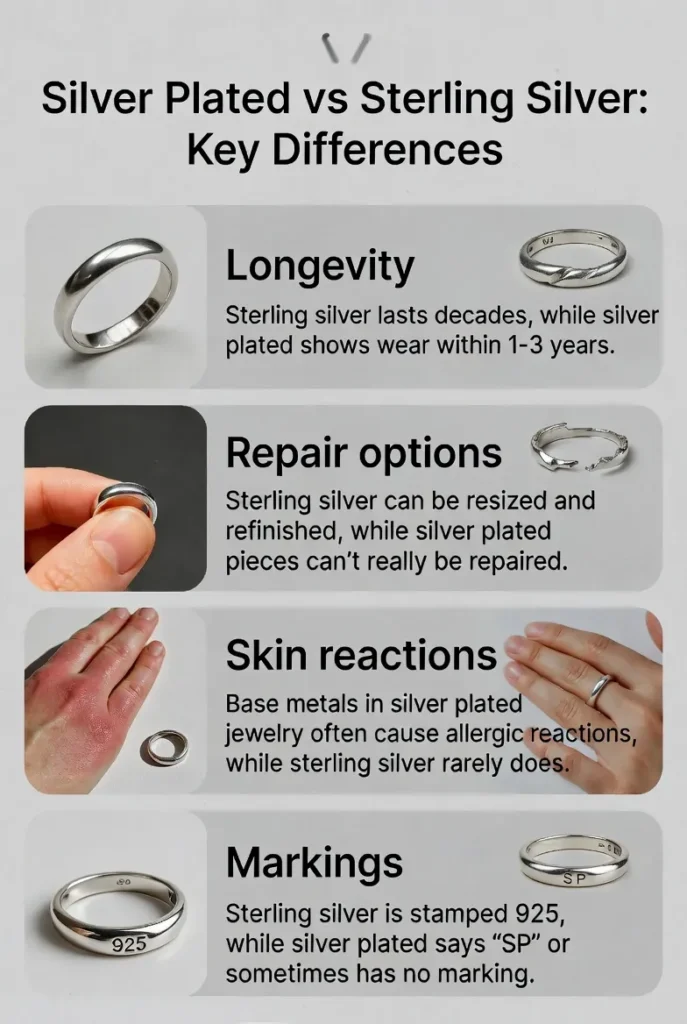
Silver Plated vs Sterling Silver: Key Differences
Both types look identical when new. You could put them side by side and most folks couldn’t tell them apart. The differences show up over time.
Sterling silver is 92.5% pure silver mixed with 7.5% other metals for strength. The silver goes all the way through. When sterling tarnishes, you can polish it and restore that shine.
Silver plated jewelry has that thin silver coating over base metal. When it tarnishes, polishing can remove what little silver remains. Polish too aggressively and you’ll rub through to the copper underneath.
- Longevity: Sterling lasts decades. Silver plated shows wear within 1-3 years.
- Repair options: Sterling can be resized and refinished. Plated pieces cant really be repaired.
- Skin reactions: Base metals in plated jewelry often cause allergic reactions. Sterling rarely does.
- Markings: Sterling is stamped 925. Plated says “SP” or sometimes has no marking.
How Long Does Silver Plating Last?
This doesn’t have one answer because so many variables affect plating lifespan. I’ve seen silver plating last five years on one piece and five weeks on another.
Generally, silver plating lasts between 6 months and 3 years with regular wear. Daily wear shortens that timeline significantly. A silver plated ring worn every day might show base metal within a few months.
Several factors determine how long plating lasts:
- Plating thickness: Better quality pieces have thicker plating
- Body chemistry: Acidic sweat eats through plating faster
- Wear location: Rings and bracelets wear faster than necklaces
- Activity level: Exercise, dishes, and gardening accelerate wear
- Storage conditions: Humidity speeds up degradation
Think of silver plating like paint on a car. It protects whats underneath and looks great when new, but it chips and wears over time.
Signs Your Silver Plating Is Wearing Off
You’ll know when silver plating starts to fail because the jewelry looks different. Knowing what to look for helps you decide when a piece is past saving.
Early warning signs:
- Tarnish that keeps coming back after cleaning
- Dark spots that won’t polish away
- Your skin turning green or black where the jewelry sits
That green skin discoloration freaks people out but its harmless. Copper in the base metal reacts with your sweat. It washes off easily.
More advanced wear looks like:
- Visible patches of copper or brass colored metal
- Rough or peeling texture on the surface
- Color variations across the jewelry
Once you see base metal peeking through, theres no way to fix it at home. Professional re-plating costs $20-$60, which often exceeds the original price.
How to Make Silver Plated Jewelry Last Longer
You cant make it last forever, but proper care extends lifespan significantly.
Storage matters more than most people realize. Keep pieces in anti-tarnish bags when not wearing them. Those silica packets from shoe boxes help alot too.
Recommended care routine:
- Put jewelry on last – after perfume and lotion have dried
- Remove before activities – swimming, showering, exercising
- Wipe after wearing – remove oils before storing
- Store separately – prevent scratching
- Clean gently – only mild soap and water
What NOT to do:
- Never use silver polish – its abrasive and removes plating
- Never use baking soda or toothpaste – too harsh
- Never soak in water or use ultrasonic cleaners
- Never swim with it – chlorine destroys plating fast
When to Choose Sterling Silver Instead
Sterling costs more upfront but often works out cheaper over time. The question is whether it makes sense for what you’re buying.
Choose sterling silver when:
- You’ll wear the piece daily
- The design is classic, not trendy
- You have sensitive skin
- The jewelry is a gift or has sentimental value
Silver plated makes sense when:
- You’re following a temporary trend
- Budget is the main priority
- The piece will only be worn occasionally
My personal rule is anything touching my skin regularly should be sterling or better. Rings, daily necklaces, bracelets – sterling. Decorative pieces for occasional wear? Silver plated works fine.
Invest in quality – shop our 925 sterling silver collection that lasts a lifetime.
Frequently Asked Questions
Is silver plated jewelry worth buying?
Silver plated jewelry works well for trendy pieces you won’t wear frequently, or when budget is tight. For everyday wear, sterling silver offers better long-term value despite higher upfront cost.
Can you shower with silver plated jewelry?
No. Water, soap, and steam all damage the thin plating layer. Shampoos contain chemicals that accelerate tarnishing and cause plating to peel. Always remove pieces before bathing.
How do you fix tarnished silver plated jewelry?
For light tarnish, wipe gently with a soft dry cloth. For moderate tarnish, use a damp cloth with tiny amount of mild dish soap. Never use silver polish or abrasive cleaners – these remove plating rather than cleaning it.
Does silver plated jewelry turn skin green?
Yes, once plating wears through to expose copper underneath. The green discoloration is copper chloride – harmless and washes off easily. It indicates the plating has worn thin and won’t stop until the piece is re-plated.