
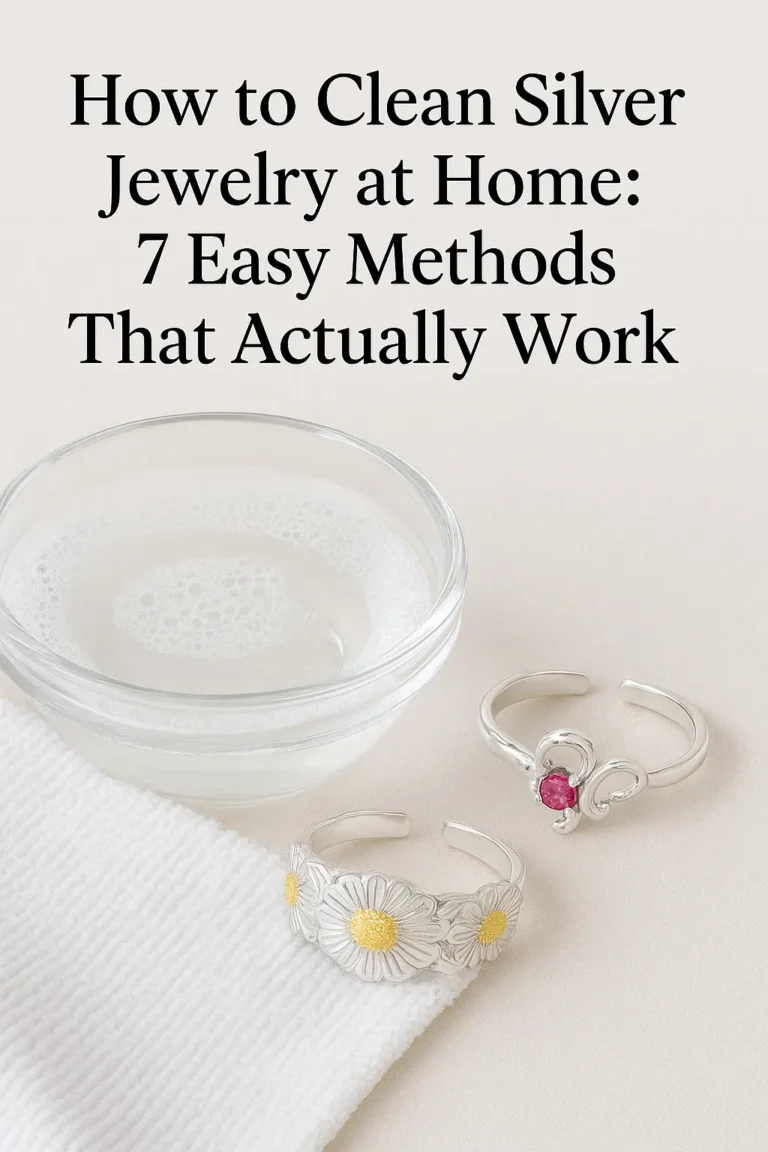
Key Takeaways: How to Clean Silver Jewelry at Home
- Tarnish is not dirt – it’s silver sulfide (Ag₂S) formed when silver reacts with sulfur in the air (from pollution, food, cosmetics, etc.). Humidity speeds it up dramatically.
- Best all-round method → Baking soda + aluminum foil + boiling water: fast, non-abrasive, removes heavy tarnish in minutes via electrochemical reaction (tarnish jumps to the foil).
- Safest everyday clean → Mild dish soap + warm water + soft brush; perfect for maintenance and jewelry with gemstones.
- For very stubborn tarnish → White vinegar + baking soda (with or without foil); avoid on pearls and soft stones.
- Toothpaste → Works but risky – can scratch silver and destroys silver-plated items. Only use plain white paste very gently as a last resort.
- Best quick touch-up → Professional anti-tarnish polishing cloth (e.g., Sunshine, Connoisseurs). Wipe after every wear – takes seconds and leaves a protective layer.
- Silver-plated vs sterling → Treat plated pieces extremely gently (soap + light polishing cloth only). Aggressive methods wear through the thin silver layer permanently.
- Prevention beats cleaning:
- Store in airtight bags or with anti-tarnish strips/silica gel/chalk.
- Avoid rubber, wood boxes, bathroom storage, perfume/hairspray contact.
- Surprisingly: wearing silver regularly keeps it shinier (skin oils + friction act as natural polish).
- Gemstone rule → When in doubt, use only mild dish soap. Never use baking soda/foil or vinegar on pearls, opals, turquoise, etc.
I’ve been working with silver jewelry for over twelve years now, and if theres one question I get asked more than any other, its about cleaning tarnished pieces at home. Most people think they need expensive products or professional help, but thats not true at all. You probaly have everything you need sitting in your kitchen right now.
That favourite sterling silver necklace gone black? Your grandmother’s ring looking dull and lifeless? Don’t worry about it. By the end of this guide, you’ll know exactly how to clean silver jewelry using simple household items. And I mean actually clean it, not just move the tarnish around like some methods do.
Let me walk you through what works, what doesnt, and why some pieces tarnish faster than others. Because understanding the why behind tarnish makes preventing it so much easier.
Why Silver Jewelry Tarnishes (The Science Behind It)
Before we get into cleaning methods, you really need to understand why your silver turns black in the first place. Its not dirt. Its not age. Its pure chemistry happening right on the surface of your jewelry.
Silver reacts with sulfur compounds floating around in the air. When these two meet, they create something called silver sulfide – thats the dark grey or black layer you see on tarnished jewelry. The chemical formula is Ag2S if your into that sort of thing. The copper in sterling silver (which is about 7.5% of the alloy) also reacts, which is why sterling tarnishes quicker than pure silver.
Where does all this sulfur come from? Its literally everywhere. Hydrogen sulfide exists in air pollution, car exhaust, and even foods like eggs and onions. That “rotten egg” smell? Thats hydrogen sulfide. Your perfume contains sulfur compounds. So does your hairspray, lotion, and most cosmetics. Even some rubber bands and certain papers release sulfur gases.
Humidity speeds up the whole process dramatically. I’ve noticed pieces tarnish in weeks during summer but stay shiny for months in winter. If you live somewhere coastal or tropical, your silver will need more frequent attention than someone in a dry climate.
Here’s something interesting though – the tarnish actually changes colour as it thickens. A really thin layer looks yellowish, then goes through red-brown and blue before finally turning that recognizable black. This happens because of how light reflects off the tarnish film at different thicknesses. So if your ring has a slight yellow tinge, catch it early before it gets worse.
One more thing worth knowing: tarnish doesnt actually damage your silver. Its just sitting on the surface like a thin skin. The metal underneath is perfectly fine, which means cleaning can bring any piece back to life no matter how dark its gotten.
The Baking Soda and Aluminum Foil Method
This is my absolute favourite cleaning method and the one I recommend to pretty much everyone. Why? Because it uses science to do the hard work instead of harsh scrubbing that can scratch your pieces.
Heres whats happening: when silver touches aluminum in a salt or baking soda solution, an electrochemical reaction occurs. The tarnish (silver sulfide) transfers from your jewelry onto the aluminum foil. You can literally watch the black coating disappear in front of your eyes – its actually quite satisfying to see.
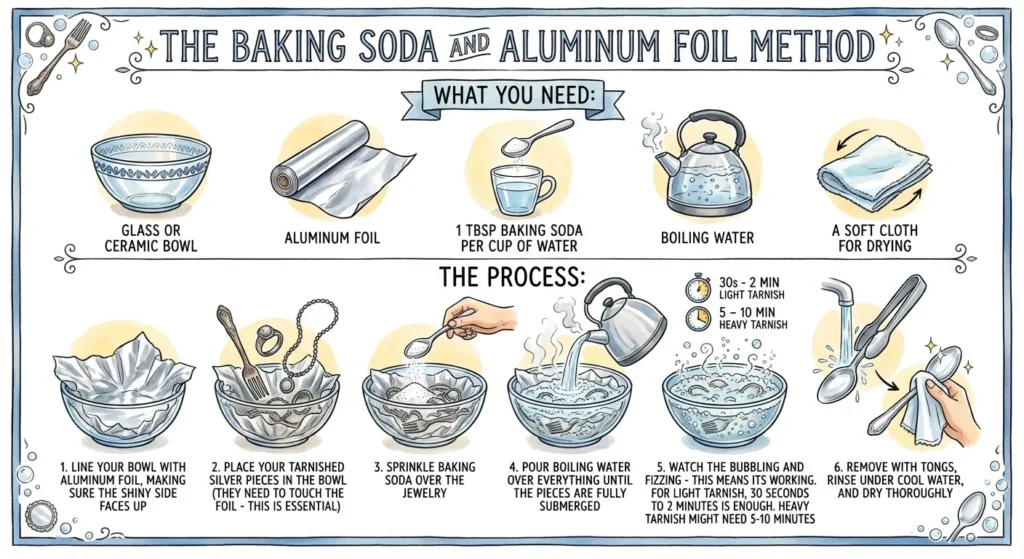
What You Need:
- A glass or ceramic bowl
- Aluminum foil
- 1 tablespoon of baking soda per cup of water
- Boiling water
- A soft cloth for drying
The Process:
- Line your bowl with aluminum foil, making sure the shiny side faces up
- Place your tarnished silver pieces in the bowl (they need to touch the foil – this is essential)
- Sprinkle baking soda over the jewelry
- Pour boiling water over everything until the pieces are fully submerged
- Watch the bubbling and fizzing – this means its working
- For light tarnish, 30 seconds to 2 minutes is enough. Heavy tarnish might need 5-10 minutes
- Remove with tongs, rinse under cool water, and dry thoroughly
You’ll notice the foil turning dark as the tarnish transfers onto it. Thats exactly what should happen. Some people add a teaspoon of salt to the mixture which can speed things up, but I find baking soda alone works brilliantly for most situations.
A word of caution here: this method works amazingly on plain silver but be careful with gemstones. Softer stones like turquoise, pearls, or opals can be damaged by the heat and alkaline solution. Stick to dish soap for those pieces.
Gentle Dish Soap Cleaning for Daily Maintenance
Not every piece needs the heavy-duty treatment. For jewelry you wear regularly that just looks a bit dull or has some everyday grime, simple dish soap and warm water works perfectly fine. This is also the safest option for silver jewelry with gemstones attached.
I clean my everyday silver this way about once a week. Takes maybe five minutes and keeps tarnish from building up in the first place. Prevention is always easier than restoration, right?
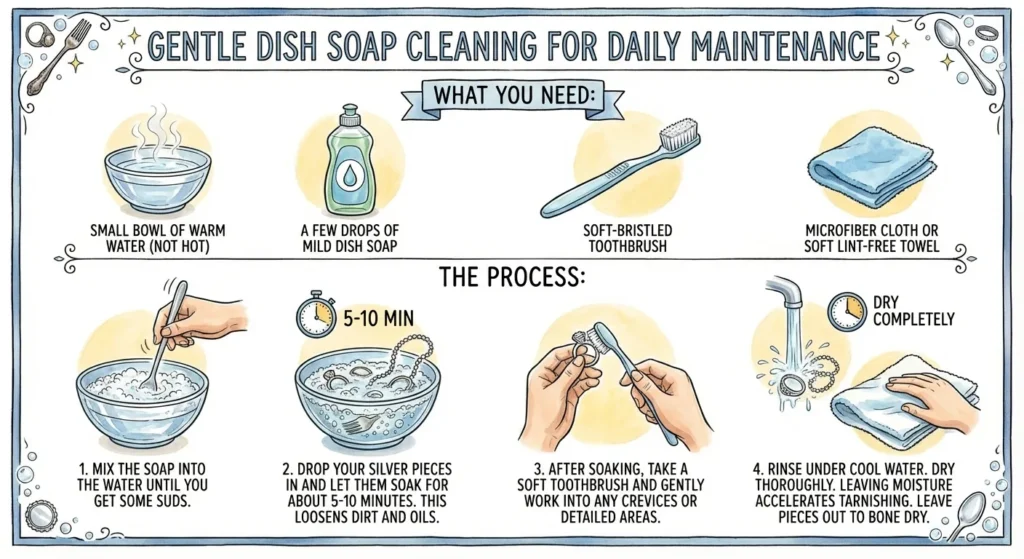
What You Need:
- A small bowl of warm (not hot) water
- A few drops of mild dish soap – nothing antibacterial or with added moisturizers
- A soft-bristled toothbrush
- A microfiber cloth or soft lint-free towel
Mix the soap into the water until you get some suds. Drop your silver pieces in and let them soak for about 5-10 minutes. This loosens dirt and oils without any harsh chemicals. After soaking, take a soft toothbrush and gently work into any crevices or detailed areas where gunk tends to hide.
Rinse everything under cool running water. And this is important – dry your jewelry completely before putting it away. Leaving moisture on silver accelerates tarnishing. I usually leave pieces out on a towel for an hour or so to make sure they’re bone dry.
This method wont remove heavy black tarnish, but its perfect for maintaining pieces that are already clean. Think of it like washing your face – you do it regularly to prevent problems, not to fix major issues.
White Vinegar Solution for Stubborn Tarnish
When baking soda alone isn’t cutting it, white vinegar adds some extra cleaning power. The acetic acid in vinegar helps break down tarnish more aggresively than water-based methods. I turn to this approach for pieces that have been sitting in a drawer for years and look almost black.
There’s two ways to use vinegar depending on how bad the tarnish is.
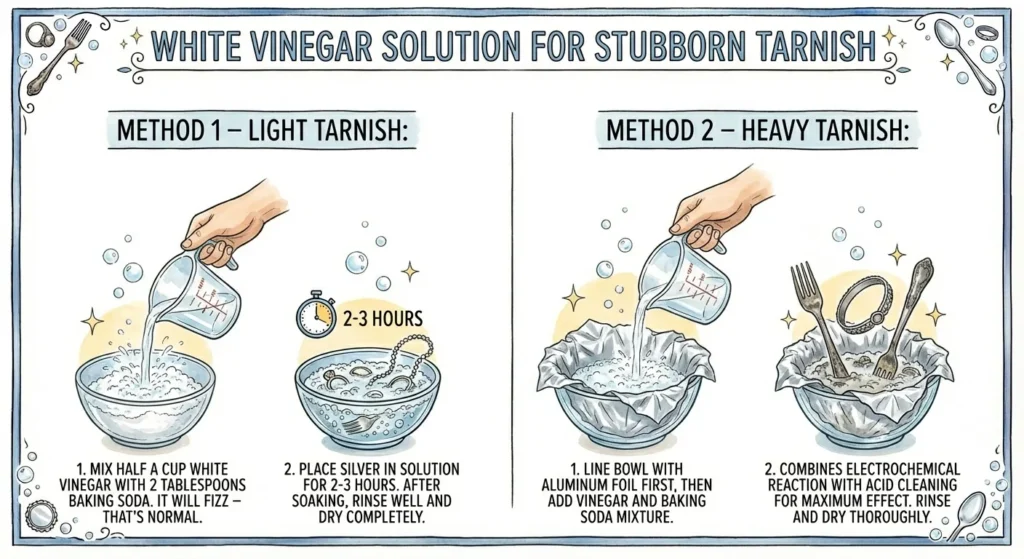
Method 1 – Light Tarnish:
Mix half a cup of white vinegar with 2 tablespoons of baking soda. Yes, it will fizz up quite a bit – thats normal. Place your silver in this solution for 2-3 hours. The long soak time lets the acid work slowly and thoroughly. After soaking, rinse well and dry completely.
Method 2 – Heavy Tarnish:
For really stubborn cases, line a bowl with aluminum foil first, then add the vinegar and baking soda mixture. This combines the electrochemical reaction with the acid cleaning for maximum effect. I’ve brought back pieces using this method that I honestly thought were ruined.
Important: vinegar is safe for plain sterling silver but not for all gemstones. Pearls especially should never go anywhere near vinegar – the acid damages their surface permanently. When in doubt, stick with the dish soap method for anything with stones.
Some people worry vinegar will damage their silver, but it wont. White vinegar diluted with water or baking soda is gentle enough for regular use. I wouldn’t soak pieces daily in straight vinegar, but occasional use for cleaning is perfectly fine.
Toothpaste Method: When to Use It (and When Not To)
Ah, the toothpaste trick. You’ve probably heard about this one. It does work – sort of – but its also the method most likely to cause problems if done wrong. Let me explain when toothpaste makes sense and when you should avoid it entirely.
Toothpaste contains mild abrasives designed to polish your teeth. These same abrasives can remove tarnish from silver. The issue is that “mild” is relative – what’s gentle on tooth enamel can still scratch soft metals like silver if you scrub too hard or use the wrong type.
If You’re Going to Use Toothpaste:
- Use plain white toothpaste only – no gels, no whitening formulas, no beads or crystals
- Apply a small amount to a soft cloth, not directly on the jewelry
- Rub gently in circular motions
- Rinse immediately and thoroughly
- Dry completely
I’ll be honest – I rarely recommend this method to anyone. The risk of micro-scratches is real, and once you scratch silver, you cant undo it. The baking soda method is just as effective without the abrasion risk.
That said, toothpaste can work well for quick touch-ups on heavily tarnished spots when you dont have other supplies available. Just don’t make it your go-to cleaning method. And absolutely never use toothpaste on silver-plated jewelry – you’ll scrub right through the thin plating layer.
One thing toothpaste is actually good for: cleaning the inside of sterling silver rings where tarnish builds up from skin contact. A quick gentle scrub with toothpaste on a soft brush can freshen these areas without risking visible surfaces.
Professional Silver Polishing Cloths
If I could only recommend one silver care product, it would be a good polishing cloth. These aren’t like normal cloths – they’re impregnated with special cleaning compounds that remove tarnish without liquid solutions or scrubbing.
Professional polishing cloths typically have two layers. The inner cloth contains micro-fine polishing agents that lift tarnish as you rub. The outer cloth buffs and shines the surface afterward. Many also deposit a thin anti-tarnish coating that slows future oxidation.
How to Use a Polishing Cloth:
- Use the treated inner cloth first, rubbing firmly but not aggressively across all silver surfaces
- You’ll see black marks appearing on the cloth – thats the tarnish being removed
- Switch to the outer cloth and buff to a bright shine
- Dont wash the cloth afterward – washing removes the treatment and makes it useless
Polishing cloths are perfect for quick daily maintenance. I keep one in my jewelry box and give pieces a quick wipe after wearing them. This removes oils from my skin before they can contribute to tarnishing. Takes literally 30 seconds.
Good brands to look for include Connoisseurs, Goddard’s, and Sunshine polishing cloths. They cost around £5-10 (6-13 USD) and last for hundreds of uses until the cloth turns completely black. Much cheaper in the long run than liquid cleaners.
One thing polishing cloths cant do: reach into intricate details or chain links. For those areas, you’ll need a liquid method. But for flat surfaces, plain bands, and general shine maintenance, nothing beats a quality polishing cloth.
How to Clean Silver Plated vs Sterling Silver
This distinction matters more than most people realize. Sterling silver and silver-plated jewelry look identical, but they require very different care approaches. Cleaning silver-plated pieces the wrong way can actually ruin them permanently.
Sterling silver is 92.5% pure silver mixed with other metals (usually copper) for strength. The “925” stamp you see on quality pieces indicates sterling silver. Silver-plated jewelry, on the other hand, has a thin layer of silver coating a base metal like brass or copper.
| Feature | Sterling Silver | Silver Plated |
|---|---|---|
| Silver Content | 92.5% pure silver throughout | Thin surface layer only (1-10 microns) |
| Identifying Marks | Stamped “925” or “Sterling” | May say “Silver Plate” or have no marking |
| Safe Cleaning Methods | Baking soda, vinegar, polishing cloths, professional cleaners | Mild soap only, gentle polishing cloth |
| What to Avoid | Harsh abrasives, ammonia-based cleaners | Abrasive methods, excessive polishing, acidic solutions |
| Can Be Polished Repeatedly? | Yes – solid silver throughout | No – plating wears off |
The big problem with silver-plated jewelry is that aggressive cleaning removes the thin silver layer. Once the plating wears through, you’ll see the brass or copper underneath showing as a different colour. This cant be fixed at home – replating requires a jeweler.
For silver-plated pieces, stick exclusively to warm soapy water and the gentlest possible touch with a polishing cloth. The baking soda method can work but be very careful not to leave pieces soaking too long. Never use toothpaste or anything abrasive.
If you’re not sure whether a piece is sterling or plated, look for markings first. No marking usually means plated. The piece also tends to be lighter in weight if its plated. When in doubt, treat it as plated and use the gentlest methods available.
Preventing Future Tarnish: Storage Tips
The best cleaning is the cleaning you dont have to do. Proper storage dramatically reduces how often your silver needs attention. I’ve kept pieces shiny for over a year just by storing them correctly.
Remember what causes tarnish – sulfur in the air and moisture. Your storage strategy should minimize exposure to both. Here’s what actually works:
Anti-Tarnish Bags and Strips: These absorb sulfur gases from the air before they can reach your silver. Toss a few strips into your jewelry box or store individual pieces in anti-tarnish bags. They’re inexpensive and genuinely effective. Replace them every 6-12 months for best results.
Airtight Storage: Simple ziplock bags work surprisingly well. Squeeze out as much air as possible before sealing. This creates a low-oxygen environment that slows tarnishing significantly. Store each piece separately to prevent scratching.
Silica Gel Packets: Those little packets that come in shoe boxes? Save them. They absorb moisture and help keep your storage area dry. Drop a few into your jewelry box or the drawer where you keep your silver.
Chalk: Regular white chalk absorbs moisture too. Keep a few pieces in your jewelry storage for an easy low-tech solution. Replace when they become crumbly.
What to Avoid:
- Rubber containers or rubber bands – rubber contains sulfur and causes rapid tarnishing
- Wooden jewelry boxes unless lined with felt – wood contains acids and sulfur compounds
- Bathroom storage – too much humidity
- Near fireplaces or gas appliances – combustion produces sulfur gases
- Direct sunlight – heat accelerates oxidation
Heres a tip most people miss: wearing your silver actually helps prevent tarnish. The natural oils in your skin create a thin protective barrier on the metal. Plus, movement and friction from wearing polish the surface naturally. Pieces you wear daily often stay shinier than ones sitting in a box.
Follow the “last on, first off” rule. Put your jewelry on after you’ve applied perfume, hairspray, and lotion. Take it off first thing when you get home, before washing hands or cooking. These simple habits prevent most tarnish-causing exposure.
Frequently Asked Questions
Can I use toothpaste to clean silver jewelry?
Technically yes, but I dont recommend it as a regular method. Toothpaste contains abrasives that can scratch silver, especially with repeated use. If you must use toothpaste, choose plain white paste (no gels or whitening formulas) and rub very gently. The baking soda method is safer and more effective for most tarnish removal.
How often should I clean my silver jewelry?
It depends on how often you wear it and your local environment. Pieces worn daily benefit from a quick wipe with a polishing cloth after each wear. A deeper clean with soap and water every 2-4 weeks keeps daily-wear pieces in good condition. Silver stored for extended periods should be checked and cleaned as needed before wearing.
Does cleaning silver jewelry damage it?
Proper cleaning methods dont damage silver. The metal itself is quite durable. However, aggressive scrubbing, harsh chemicals, or abrasive materials can cause scratches. Silver-plated jewelry is more vulnerable – the plating can wear through with excessive cleaning. Always use the gentlest effective method and avoid scrubbing on visible surfaces.
What’s the fastest way to clean tarnished silver?
The baking soda and aluminum foil method produces results in under 5 minutes for most tarnish levels. Line a bowl with foil, add your silver, sprinkle with baking soda, pour boiling water over everything, and watch the tarnish disappear. For light tarnish, a polishing cloth takes just seconds to restore shine.
Can I clean silver jewelry with gemstones?
Yes, but carefully. Soft or porous gemstones like pearls, opals, turquoise, and coral can be damaged by cleaning solutions. For these pieces, use only mild dish soap and water with a soft brush. Hard stones like diamonds, sapphires, and rubies can handle most cleaning methods safely. When uncertain about a stone, choose the gentlest option available.
Pingback: Looking for sterling silver jewelry cleaner tips - Dutable