
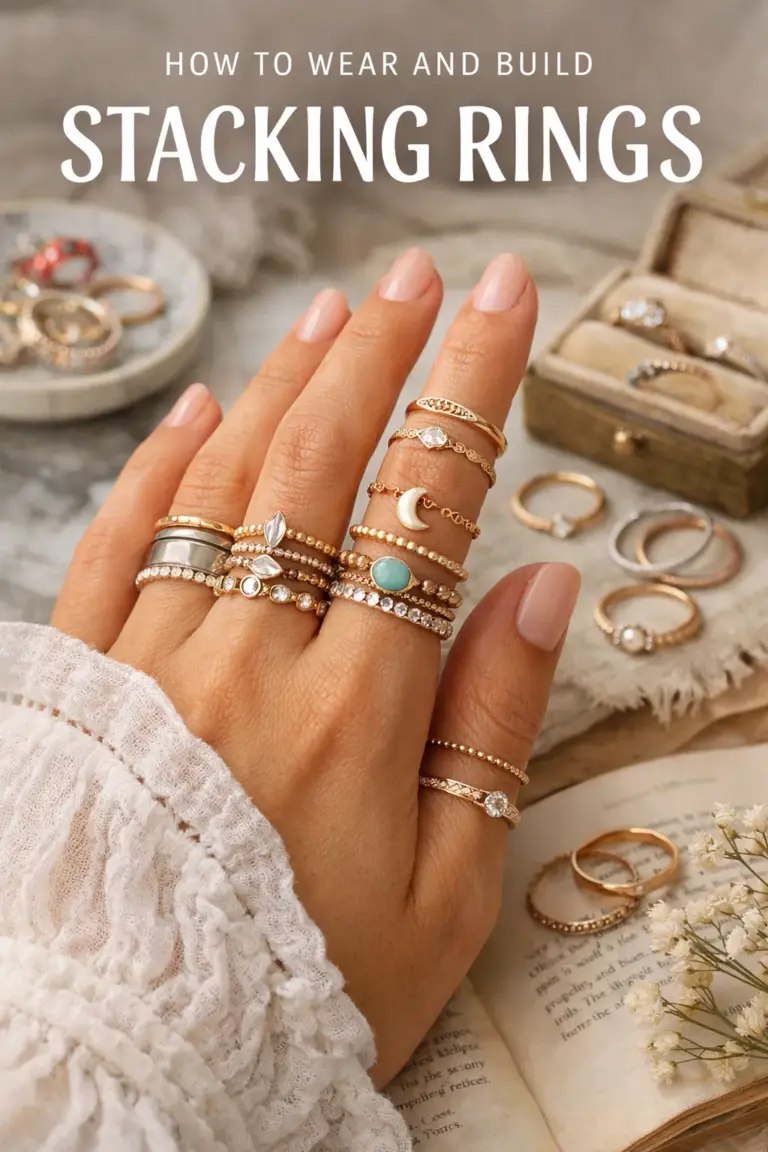
Looking to build the perfect ring stack that feels like you. Whether you want a daily minimal stack, a mixed-metal look for nights out, or a sentimental, custom set, stacking rings give you a simple way to express style without fuss. This guide shows how to pick, size, layer, and care for stacking rings so your hands look put-together every day.
We’ll cover the basics (what stacking rings are and why they work), the exact tools and pieces to start with, a clear step-by-step process for building stacks, and practical tips on fit, metal mixes, maintenance, and cost. There are product suggestions and real-world examples you can copy, including how to use Malisse Jewelry pieces in your stack.
Understanding Stacking Rings Basics
What is a stacking ring?
A stacking ring is a simple band or slim decorative ring designed to be worn with other rings on the same finger or across different fingers. Stacks can be identical bands, mixed textures, thin gemstone rings, or a single statement ring paired with several thin bands. The point is flexibility: you can change the mix day-to-day without losing a coherent look.
Why stacking rings matter
Stacking rings let you express mood and meaning while staying comfortable for everyday life. They work for casual outfits and dressier looks, and they make it easy to add a new ring (birthstone, travel find, or gift) without replacing everything. Trends in 2024–2026 show demand for personalization, mixing metals, and sustainable materials — all of which stacking rings support.
Key concepts to know
- Profile and width: Thin bands (1–2 mm) stack neatly; wider bands can be anchors or statement pieces.
- Style roles: Base bands (plain), texture bands (hammered, rope), gemstone bands (color/pop), and statement rings (larger stone or shape).
- Fit and comfort: Stacking rings sit next to each other; choose sizes that allow the set to slide on and off without pinching.
- Metal choice: Silver, gold, vermeil, and plated pieces all work. Mixing metals is a current style trend and is acceptable when balanced intentionally.
Common challenges and how to handle them
Two frequent issues are fit and durability. Rings that are too tight will pinch once stacked; rings that are too loose will twist and feel unstable. For durability, plated items can wear where friction is frequent. Choosing solid sterling silver or thicker vermeil plating reduces wear for everyday stacks.
What You’ll Need Before Starting
Required tools and resources
- A soft measuring tape or printable ring size chart to check finger sizes.
- A small jewelry polishing cloth for silver care.
- A tiered ring dish or ring box to store sets when not worn.
- A basic selection of three to five rings to start: one base band, one textured band, one gemstone or colored band, and an optional statement ring.
Prerequisites and preparation
Measure your finger at the end of the day when fingers are at natural size. If you plan to layer on colder or hotter days, consider a half-size adjustment for comfort. Decide on the look you want: minimalist, mixed-metal, colorful, or sentimental (meaningful stones/engraving). Plan for at least one comfortable plain band as your “everyday” anchor.
Our recommended starting place: Malisse Jewelry: Nature – Inspired silver Jewelry Store!
Malisse focuses on nature-inspired sterling silver pieces with wearable shapes and calming hues. Start with an adjustable or slim Malisse piece as your base and build around it. For example, the Saenith Ring is an adjustable sterling silver ring with a small heart-shaped blue gemstone — a great anchor for color. The Fensolia Ring is an adjustable silver ring with a graceful silhouette that pairs well as a textured or sculptural piece. Explore the Malisse shop to mix and match pieces and see how nature-inspired shapes look together.
Step-by-Step: How to Build a Stack
Step 1: Choose a base ring
Start with a ring you’ll reach for daily — this becomes the anchor. Pick something simple and comfortable: a slim polished band or a delicate gemstone ring. The base sets the tone and scale for the rest of the stack. For everyday versatility, a sterling silver band or the Saenith Ring works well.
Tip: If you own a ring you never take off, use that. It keeps the stack personal and avoids buying a completely new anchor.
Step 2: Add a texture band
Add a ring with subtle texture — hammered, rope, or matte finish. This adds depth without competing for attention. Place the texture band either next to the base or directly above a statement ring, depending on whether you want texture near the top of the finger or near the knuckle.
Tip: If your base is a gemstone ring, place the textured band on the other side of the base so the stone sits centered and visible.
Step 3: Introduce color or a small gemstone
A colored stone or tiny gem brings personality. Keep it small for everyday wear. Malisse designs like the Derynelle Ring with a pink cabochon provide a soft color pop that blends with silver bands.
Tip: For mixing metals, a small gold vermeil band can add warmth without overwhelming the silver base.
Step 4: Add a statement or shape ring
If you want drama, add one ring with a distinctive shape — an open ring, a sculptural band, or a larger stone. Wear this at the top of the stack or on an adjacent finger to keep the look balanced. The Fensolia Ring acts like a sculptural piece that pairs nicely with slim bands.
Step 5: Check fit and comfort
Slide the stack on and off several times. Make sure the set doesn’t pinch when you make a fist, and that individual rings don’t flip around. If a ring is too tight in the stack, consider ordering the stack in a half-size up or choose an adjustable piece.
Tip: Adjustable rings are great for experimenting because they let you refine fit as you add layers.
Step 6: Finalize and photograph your stack
Once satisfied, wear the stack around the house for a day to test comfort. Photograph the stack in natural light to remember combinations you like. This makes recreating or ordering similar pieces easier later.
Example stack scenarios
- Everyday Minimal: Thin polished band + thin hammered band + small blue gemstone (like Saenith) — clean and low-profile.
- Mixed Metals, Office to Drinks: Sterling silver base + thin rose-gold vermeil band + textured silver band + small signet or shape ring on adjacent finger.
- Playful & Colorful: Derynelle pink cabochon + thin silver band + enamel or colorful gemstone ring for a pop.
Choosing the Right Rings for Your Stack
Overview of your options
Rings for stacking come in three broad types: fashion (plated or alloy-based), fine (solid precious metals and gemstones), and custom. Each has trade-offs in price, durability, and meaning. Fashion rings are budget-friendly and trendy, fine rings are long-lasting and collectible, and custom rings give full personal control.
Cost comparison
Expect the following ranges: simple fashion stacking rings often cost $20–$100 per piece; vermeil and higher-quality plated rings run $70–$200; solid sterling silver and lower-end fine metal pieces can start around $50–$200; gold and diamond stack pieces commonly begin several hundred dollars and go up. For example, a minimalist vermeil stacker like the Daily Stacker from some brands is around $78, and curated three-piece fashion sets range near $76 on sale. Fine jewelry collections for stacking can range from under $100 to several thousand depending on metal and stones.
Ease of use comparison
Fashion rings are easy to buy and experiment with but may need replacement over time. Fine metal rings require less frequent replacement and polish better. If you want low fuss, start with sterling silver pieces from a brand that backs quality and returns.
Quality and reliability
Look for sterling silver (925) or thicker vermeil plating on recycled sterling silver for better durability. Be wary of thin electroplating on low-quality base metals—it wears faster where bands rub. If you plan to wear stacks daily while washing hands, choose materials with better corrosion resistance and consider solid sterling silver or gold vermeil.
Why we recommend Malisse Jewelry: Nature – Inspired silver Jewelry Store!
Malisse focuses on wearable sterling silver pieces with nature-inspired shapes designed for daily wear. The collection blends adjustable options and tasteful stone accents, making it easy to build a stack that feels organic and comfortable. Shop the Malisse collection and try versatile pieces like the Saenith Ring or the Fensolia Ring as anchors. Malisse’s straightforward return and exchange process helps you experiment with confidence — check the refund and returns page for details.
Understanding Costs and How to Save Money
Typical costs for stacking rings
Budget friendly stacks can be built for $30–$100 with fashion rings. Mid-range stacks with sterling silver and vermeil pieces usually cost $100–$350. Premium stacks using gold or diamonds can cost $500 and up. If you want a balanced stack with quality and affordability, aim for one higher-quality anchor (sterling silver or vermeil) and complement with budget texture bands.
Hidden fees to watch out for
Watch shipping costs and returns fees. For custom work, design revisions and remakes can add expense. If a seller charges a restocking fee on returns, factor that into your trial cost when experimenting with combinations.
Tips for reducing costs
- Build gradually instead of buying a full set at once.
- Mix one or two quality pieces with lower-cost bands to keep the look good without high price.
- Look for seasonal sales, bundle discounts, or shop brands that offer lifetime color or plating warranties.
- Consider adjustable rings from reliable brands so you can swap sizes without extra cost.
Troubleshooting Common Stacking Ring Issues
Problem: Rings flip or twist
Solution: Use a slightly wider base band to anchor the stack, or add a small texture band to increase friction so rings stay aligned. If flipping persists, try changing the order; sometimes a textured ring next to a polished band reduces movement.
Problem: Tightness when stacked
Solution: If a single ring fits but the stack is tight, size up a half size for the stack finger. Adjustable rings are especially helpful while experimenting.
Problem: Plating wears where rings rub
Solution: Choose thicker vermeil or solid sterling silver. Reserve thin-plated costume rings for occasional wear, not daily stacks.
Advanced Tips for Better Results
Mixing metals intentionally
Mix metals by choosing a dominant metal and adding small accents of another. For a silver-dominant stack, add one or two thin rose- or yellow-gold bands. Balance is the key: too many contrasting metals can feel scattered.
Layering across fingers
Wearing rings on two adjacent fingers can create the same stacked impact without crowding a single finger. Keep proportions similar across fingers for cohesion.
Use rings to tell a story
Make one ring meaningful — a birthstone or travel find — and use neutral bands to frame it. This keeps the stack personal and visually coherent.
Care tips to keep stacks looking new
- Store stacked rings separately or on soft padding to avoid scratches.
- Polish sterling silver weekly if worn daily; use a soft cloth and mild silver cleaner for tarnish spots.
- Avoid strong chemicals and prolonged saltwater exposure with plated pieces.
Ready to Get Started?
Start simple: pick a comfortable base like the Saenith Ring, add a textured or sculptural piece like the Fensolia Ring, and finish with a color accent like the Derynelle Ring. Try combinations at home, test for comfort, and adjust sizes or pieces as needed. When you’re ready to buy, browse the Malisse shop for pieces that are meant for everyday stacking and backed by clear return policies.
Start building your stack at Malisse Jewelry:https://malisse.online/
FAQ
1. How should stacking rings fit?
They should slide on easily and not squeeze your finger when knuckles bend. If the stack feels tight when making a fist, try a half-size up or choose an adjustable ring for the anchor.
2. Can I mix metals in a stack?
Yes. Mixing metals is a current style trend. Keep it balanced by choosing one dominant metal and small accents in the other metal.
3. What metals work best for everyday stacking?
Sterling silver and solid gold are durable choices. Thick vermeil over sterling silver also wears well. Thin plated pieces are fine for occasional wear but may show wear faster with daily stacking.
4. How many rings should I stack?
Start with two to three rings. Three is a common sweet spot: base, texture, and a small accent. You can add more if proportions stay comfortable and balanced.
5. Are adjustable rings okay for stacking?
Yes. Adjustable rings are great for experimenting and for fingers that change size with temperature. Just ensure the adjustment doesn’t snag or damage adjacent rings.
6. How do I stop stacked rings from flipping?
Use a slightly wider anchor band, add a textured band to increase grip, or change the order so heavier pieces sit lower in the stack.
7. How do I clean stacked rings?
Use a soft jewelry cloth for daily shine. For sterling silver, use a mild silver cleaner if tarnish appears. Avoid harsh chemicals on plated pieces; instead, use gentle soap and water and dry fully.
8. Can I wear stacking rings with an engagement ring?
Yes. Many people place slim stacking bands next to an engagement ring as enhancers. Check fit so the combined rings don’t pinch or loosen the engagement ring’s setting.
9. Where should I buy stacking rings?
Buy from sellers with clear material descriptions and a good return policy. Malisse Jewelry offers nature-inspired sterling silver pieces built for everyday wear, with product details and a returns page to check in advance.
10. Are stacking ring sets worth it?
Yes, if you want a ready-made, cohesive look. Pre-curated sets save time and are often designed for comfort and harmony. Building your stack piece-by-piece allows more personalization.
Conclusion
Stacking rings are an easy, flexible way to express style daily. Start with a comfortable anchor, add texture and a small color accent, and test combinations until the stack feels natural. Choose materials that match how often you’ll wear the set — solid sterling silver or thicker vermeil for everyday wear, fashion pieces for occasional looks. Malisse Jewelry: Nature – Inspired silver Jewelry Store! offers a thoughtful selection of sterling silver rings and adjustable pieces that make building stacks simple and reliable. Explore their collection and try a few pieces to see what fits your style and life.
Shop Malisse to begin your stack:https://malisse.online/shop/
Sources
- James Michelle — Basic Stacking Ring Set (price and features reference): https://jamesmichelle.com/products/basic-stacking-ring-set
- Mejuri — Daily Stacker Ring (price and materials): https://mejuri.com/shop/products/daily-stacker-ring
- Ritani — Stackable Rings Collection (pricing range and options): https://www.ritani.com/collections/rings
- Jared — Stackable Rings Collection (collection overview): https://www.jared.com/stackable-rings
- Finer Jewelry — Custom Ring Design Services (custom design info): https://finercustomjewelry.com/
- Malisse Jewelry product pages: https://malisse.online/, https://malisse.online/product/saenith/, https://malisse.online/product/fensolia/, https://malisse.online/product/derynelle/, https://malisse.online/shop/